Pricing
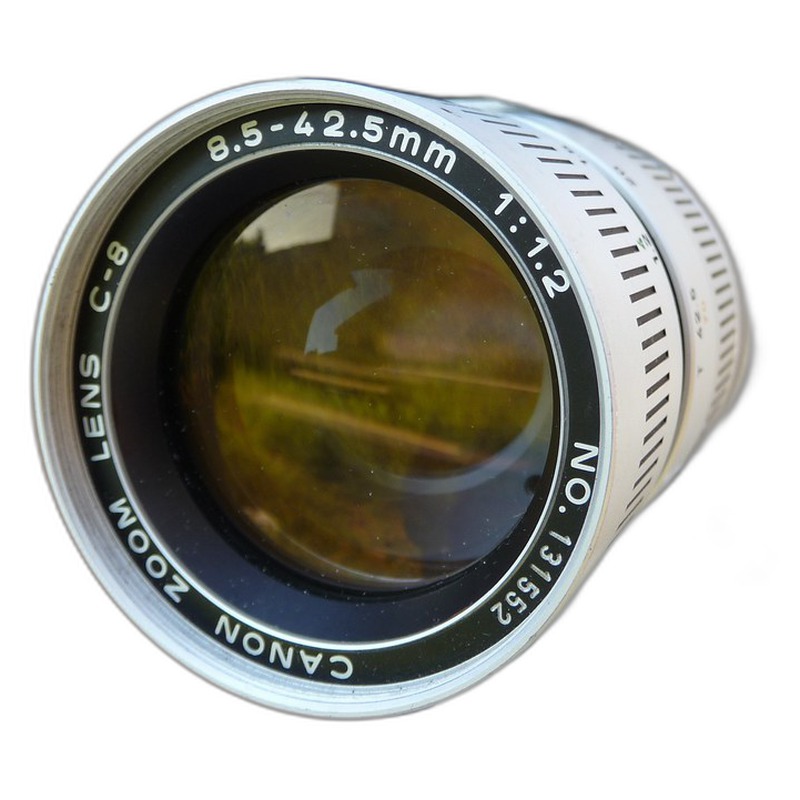
Canon Cine Zoom 512
Canon · Japan · 1964 · 135 film
Introduced in 1964, the Canon Cine Zoom 512 represents a significant step forward for Canon in the realm of zoom optics for 35mm still photography. While bearing its name, this camera was not designed as a primary still shooter but rather adapted Canon's expertise in cine zoom lenses for the still format. It featured Canon's first interchangeable zoom lens for 35mm SLRs, likely a preset-variable focal length lens offering versatility previously unavailable in compact Canon SLR systems of the era. This innovation catered to photographers desiring the compositional flexibility of a zoom without the bulk and cost of larger format cine equipment. Its design leveraged cine-derived mechanics, prioritizing precise optical performance and zoom control over the rapid advancements happening in still camera automation at the time.
The Cine Zoom 512 embodied Canon's strategy to integrate its burgeoning optical prowess, particularly zooms, into the burgeoning 135 (35mm) SLR market. While it shared the Canonflex mount of Canon's contemporary SLRs, its core identity was its specialized zoom capability, making it a tool for specific applications requiring variable focal lengths, such as sports, nature, or documentary work where changing lenses quickly was impractical. It filled a niche market segment alongside Canon's fixed-lens SLRs, demonstrating their commitment to optical innovation before the flood of automated, consumer-focused models that would dominate the late 60s and 70s. Its significance lies more in Canon's zoom lens development and its adaptation for the still photographer than as a standalone revolutionary camera body.
Specifications
| Film Format | 135 |
_red/main.jpg)
 Enjoy this museum? Support on Ko-fi