Pricing
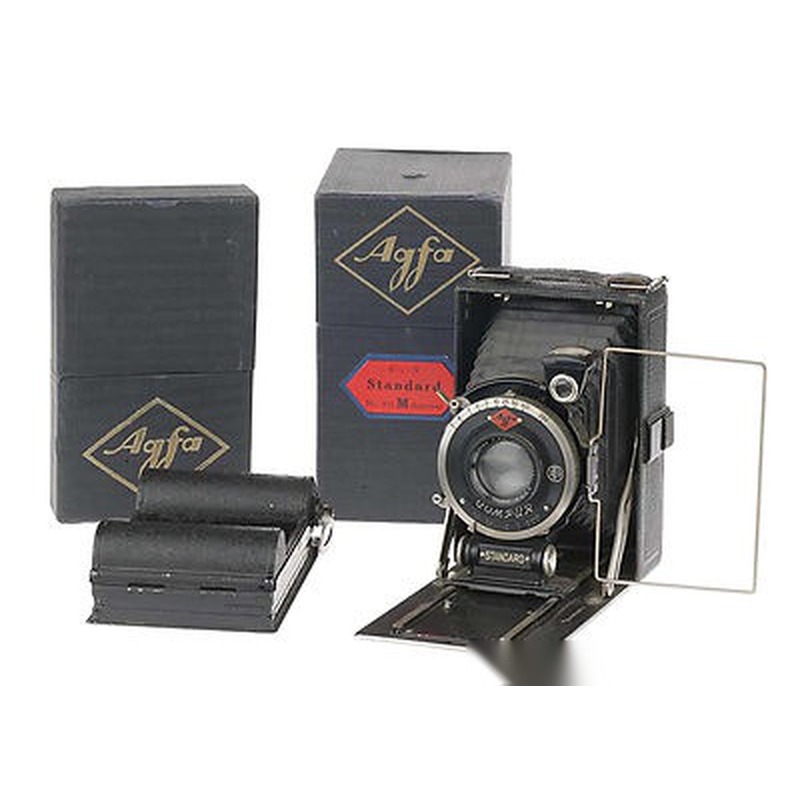
Agfa Standard 204
Agfa · Germany · 1926–1933 (7 years) · 135 film
The Agfa Standard 204 represents the German manufacturer's early venture into the emerging 35mm photography market during the late 1920s and early 1930s. As one of Agfa's contributions to the 35mm format that was being pioneered by competitors like Leica, the Standard 204 offered consumers a compact alternative to larger plate and roll-film cameras of the era. While not as technologically innovative as some of its contemporaries, this camera provided reliable performance for amateur photographers seeking the convenience of 35mm film in a more affordable package than luxury models.
Physically, the Standard 204 featured a straightforward design typical of its time, with a simple chassis likely constructed from metal with leatherette covering. The camera would have included a basic viewfinder, a fixed or limited-range lens, and simple controls for adjusting exposure and focusing. Like most cameras of this era, it likely had no rangefinder system, focusing instead through a simple split-image or ground-glass system. The Standard 204 served as a practical tool for documenting everyday life rather than an instrument for serious artistic photography, occupying the middle ground between sophisticated professional cameras and rudimentary snapshot models.
Specifications
| Film Format | 135 |
/main.jpg)
/main.jpg)
/main.jpg)
_Luxus/main.jpg)
 Enjoy this museum? Support on Ko-fi