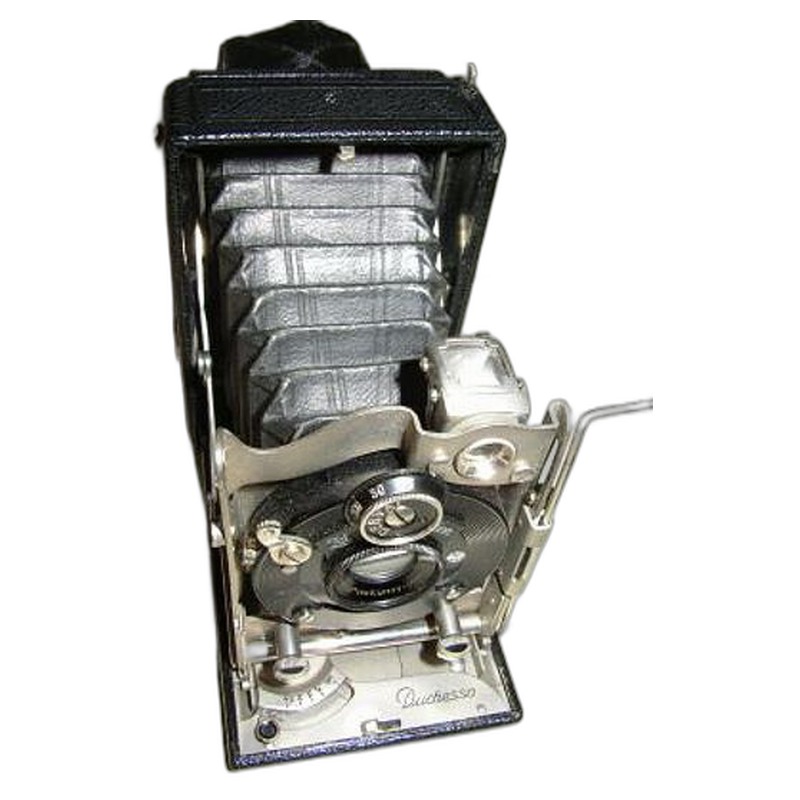
Zeiss Duchessa
Zeiss · Germany · 1926–1929 (3 years) · 135 film
The Zeiss Duchessa represents a notable but not pivotal chapter in the early history of 35mm photography. Produced by the prestigious German manufacturer from 1926 to 1929, this camera arrived on the scene several years after the groundbreaking Leica I established the 35mm format as viable for serious photography. While the specific design and features of the Duchessa remain somewhat obscure today, it clearly positioned Zeiss as a significant contender in the burgeoning 35mm market during the late 1920s. It likely offered a well-built alternative, potentially sharing some design philosophies with contemporary Zeiss Ikonta folders but adapted for the smaller 135 cartridge format, catering to enthusiasts and professionals seeking Zeiss optics and engineering in a compact form factor. Its relatively short production run suggests it occupied a specific niche, facing stiff competition from established players like Leica and emerging alternatives.
As a product of Zeiss Ikon during a period of transition and innovation, the Duchessa underscores the company's recognition of the 35mm format's potential. While lacking the documented technical innovations or widespread adoption that cemented other models as icons, its existence highlights Zeiss' commitment to diversifying its offerings beyond its dominant medium and large format lines. Crafted with the typical attention to detail expected of Zeiss, it served as a capable, if not revolutionary, option for photographers choosing the new 135 standard, contributing to the ecosystem that would later see the format mature. Its historical importance lies more in its role as one of Zeiss' significant early attempts in 35mm rather than any singular defining feature or user legacy.
Specifications
| Film Format | 135 |
 Enjoy this museum? Support on Ko-fi