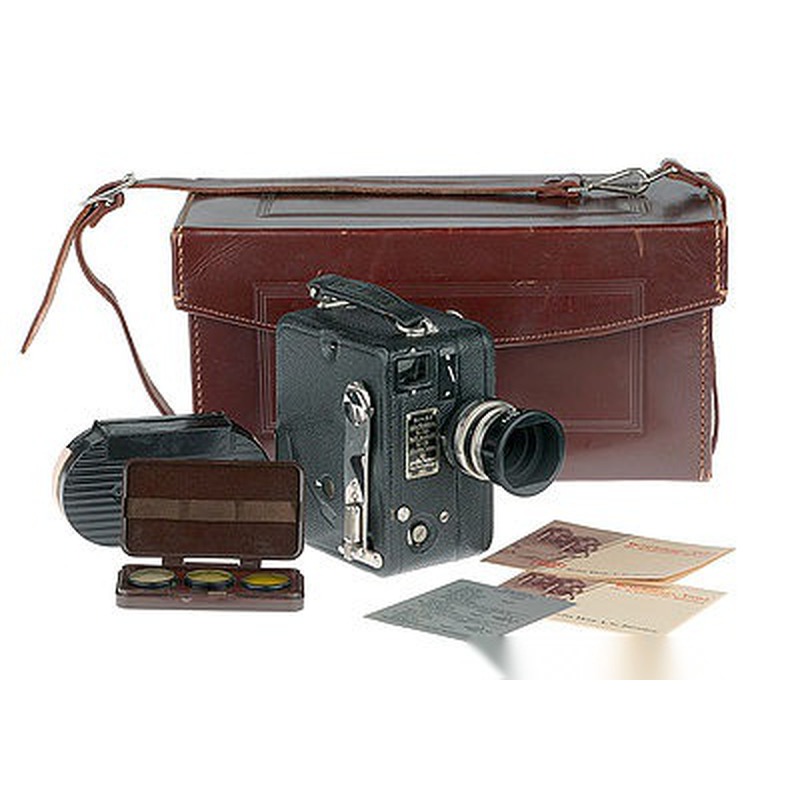
Zeiss Kinamo KS-10
Zeiss · Germany · 1932 · 135 film
The Kinamo KS-10, introduced by Zeiss in 1932, represents a significant step in the early adoption of 35mm film for still photography. As part of Zeiss's Kinamo series, which originally focused on cinematography before being adapted for still cameras, the KS-10 featured a compact design that helped establish 35mm as a practical format for photographers seeking portability without compromising image quality. The camera typically incorporated Zeiss's renowned optical systems, including lenses like the 50mm f/3.5 Tessar, which delivered the sharpness and clarity expected from Zeiss optics. Its metal construction and precision engineering reflected German manufacturing standards of the era, while its relatively straightforward operation made it accessible to serious photographers looking to embrace the emerging 35mm format.
During the early 1930s, the Kinamo KS-10 occupied a notable position in the developing 35mm camera market, offering a quality alternative to competitors while maintaining Zeiss's reputation for optical excellence. As one of the early adopters of the 35mm still photography format that would eventually dominate the industry, the KS-10 contributed to the technological evolution toward portable cameras. While not achieving the legendary status of some contemporaries, the Kinamo KS-10 remains an important piece of photographic history representing the transition from larger format cameras to compact 35mm systems during a formative period in photography.
Specifications
| Film Format | 135 |
/main.jpg)
/main.jpg)
/main.jpg)
/main.jpg)
 Enjoy this museum? Support on Ko-fi