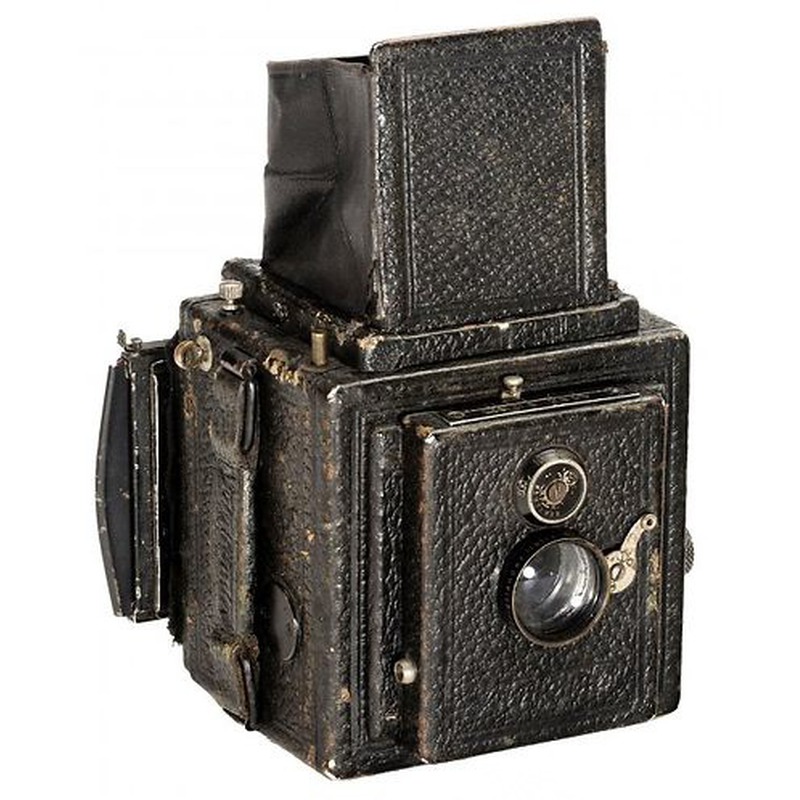
Voigtlander Alpin Reflex
Voigtlander · Germany · 1926 · 135 film
The Alpin Reflex represents Voigtlander's significant early entry into the burgeoning 35mm format market shortly after the Leica I. Introduced in 1926, it was part of the crucial transition period when 35mm film, previously relegated to motion picture work, was adapted for still photography. As a reflex camera, it utilized a waist-level finder system reflecting the image via a mirror, offering a brighter, laterally reversed view compared to earlier rangefinder or viewfinder models. This design choice placed it among the earliest 35mm reflex options, catering to photographers seeking a more direct viewing experience than simple optical finders allowed. The camera embodied Voigtlander's reputation for solid German engineering and compact design, utilizing a focal plane shutter common for the era, and it demonstrated the growing viability of 35mm for serious amateur and professional use, paving the way for the explosion of small-format photography later in the century.
While technically important as an early Voigtlander reflex and part of the foundational wave of 35mm cameras, the Alpin Reflex lacked the widespread adoption or groundbreaking innovation that defined truly legendary models. Its primary historical context lies in representing the critical first steps towards the 35mm system we know today, showcasing a major manufacturer adapting to the new format. It shared the stage with other early 35mm contenders like the Leica I and the Leica II, but its specific reflex design and Voigtlander's established lens heritage gave it a niche importance as an alternative viewing option during the format's formative years. Its legacy is firmly rooted in being a competent, well-built early example reflecting the technological optimism and experimentation of the mid-1920s.
Specifications
| Film Format | 135 |
/main.jpg)
/main.jpg)
_Deluxe/main.jpg)
 Enjoy this museum? Support on Ko-fi