/main.jpg)
Pricing
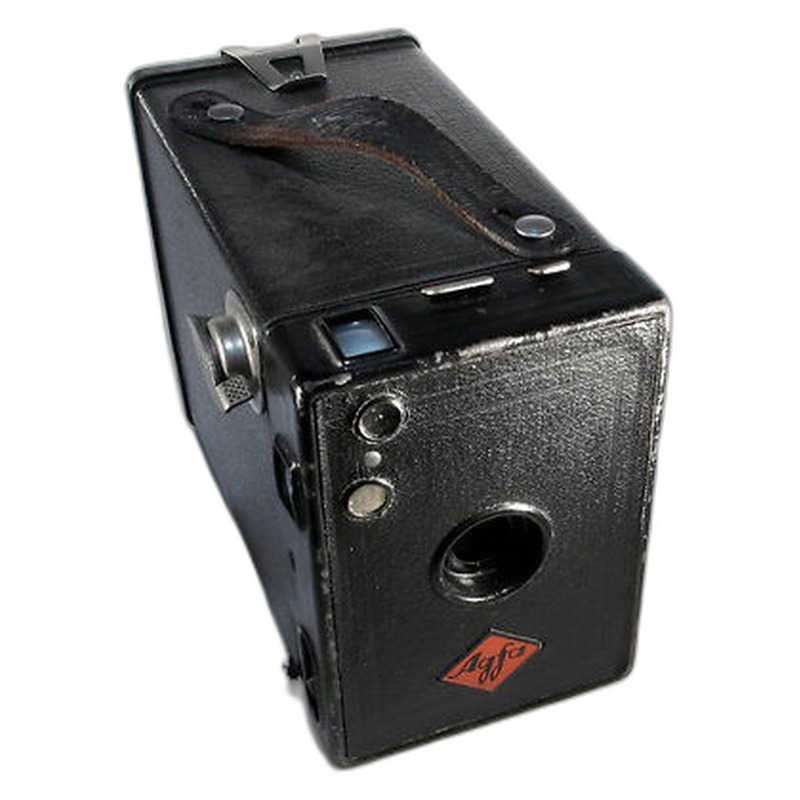
Agfa Box 54 (Box I)
Agfa · Germany · 1930–1933 (3 years) · 135 film
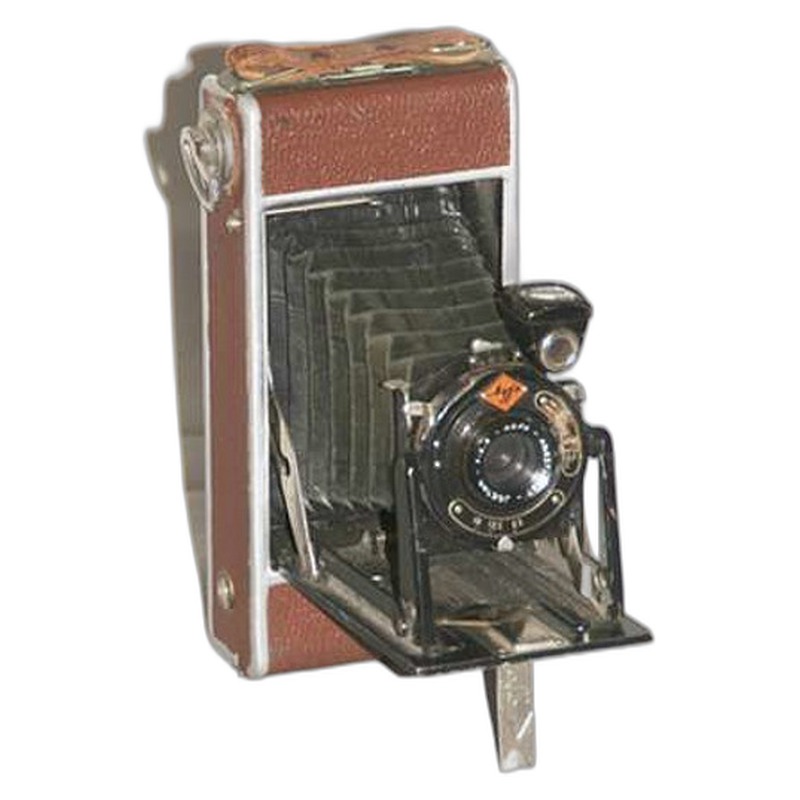
The Agfa Box 54 (Box I) stands as one of Agfa's earliest attempts to make 35mm photography accessible to the mass market in the early 1930s. Positioned as a simple, straightforward box camera, it represented a practical, budget-friendly alternative to the increasingly sophisticated but still expensive precision 35mm cameras like the Leica I and Contax I. Utilizing standard 135 film cassettes, the Box I offered a compact and relatively affordable way for amateurs to enter the burgeoning 35mm format. Characterized by its minimal controls, likely featuring just a simple shutter release and basic aperture selection, its design prioritized ease of use over technical complexity, embodying the "snapshot" ethos of the era. Constructed primarily from sheet metal with basic finishes, it lacked the precision engineering of contemporaries but fulfilled its function as a point-and-shoot camera for casual photography.
While not revolutionary in design or features, the Agfa Box 54 (Box I) holds significance as a specific model within Agfa's broader Box series, demonstrating the company's early commitment to popularizing 35mm film outside the high-end sphere. Its production window from 1930 to 1933 places it during a formative period when 35mm film was transitioning from specialized to more widespread use. It served as a utilitarian tool, capturing everyday moments without pretension, and reflects Agfa's strategy of offering a tiered product range. As a representative example of early 1930s 35mm consumer cameras, it provides insight into the accessibility and simplicity that began to define this format for general users.
Specifications
| Film Format | 135 |
/main.jpg)
 Enjoy this museum? Support on Ko-fi