/main.jpg)
Pricing
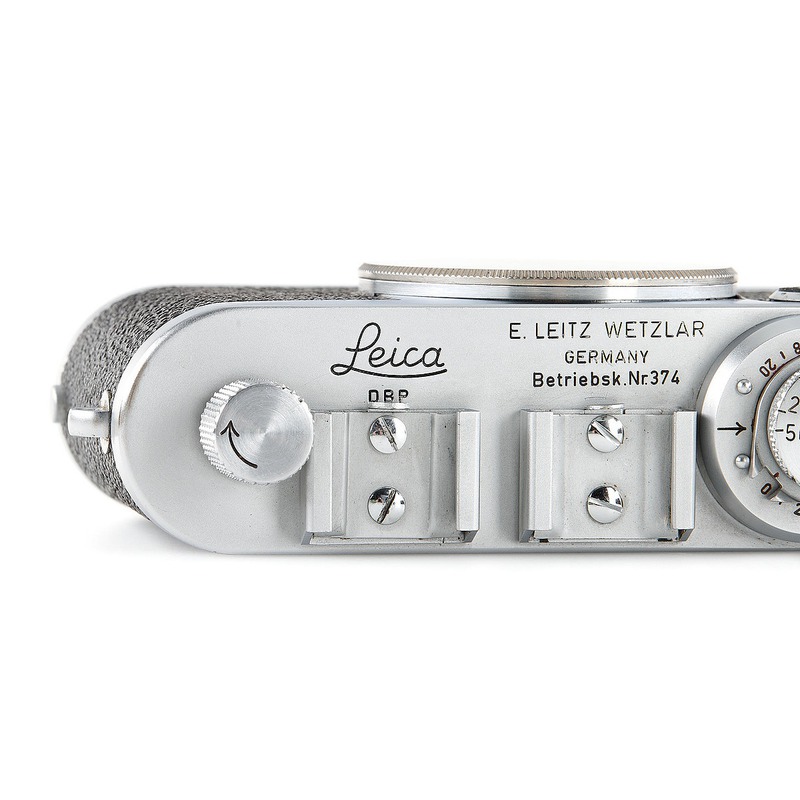
Leica If (red dial)
Leica · Germany · 1952–1956 (4 years) · 135 film
The Leica If (red dial) represents a transitional model in Leica's post-war lineup, produced from 1952 to 1956. It served as a bridge between the classic Leica III series and the revolutionary M-system. This 35mm camera featured a simplified shutter speed selector compared to contemporary Leica III models, indicated by the distinctive red dial – a practical design choice likely aimed at streamlining operation for photographers familiar with Leica's rangefinder system. Maintaining Leica's renowned precision and robust construction, the If embodies the quality expected from the brand during this period, offering a reliable tool for serious amateurs and professionals who valued a compact, dependable camera before the introduction of the M3 in 1954. Its specific place within Leica's evolution highlights the brand's commitment to refinement and adaptation as photographic technology advanced.
As a non-interchangeable lens rangefinder camera (unlike later M-models), the If utilized a fixed lens mount, likely a screw-thread type compatible with Leica's famous screw-mount lenses (e.g., Summarit, Hektor, Elmar). This design choice grounded it firmly in Leica's established traditions while incorporating modernized features. The camera was designed for the discerning user who prioritized build quality and the Leica experience over cutting-edge innovation, embodying a practical and high-quality solution for 35mm photography during the early 1950s before the M-series dominated the market.
Specifications
| Film Format | 135 |
/main.jpg)
/main.jpg)
/main.jpg)
/main.jpg)
/main.jpg)
 Enjoy this museum? Support on Ko-fi