Pricing
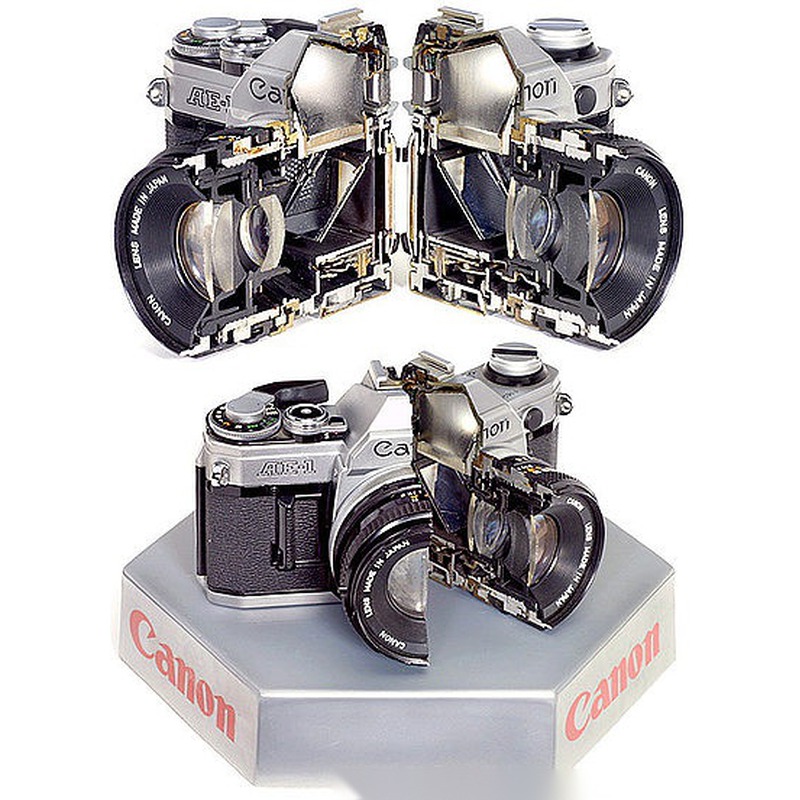
Canon AE-1 Cutaway
Canon · Japan · 1976 · 135 film
The Canon AE-1 Cutaway, introduced in 1976, represents a pivotal moment in 35mm SLR history. It was the first camera in Canon's popular A-series to feature a microprocessor, revolutionizing the market by bringing sophisticated, automatic exposure (AE) control to the serious enthusiast and advanced amateur. While sharing the same core electronic AE system and FD lens mount as the standard AE-1, the Cutaway variant served a unique educational purpose. Specially constructed for technical demonstrations, schools, and trade shows, its non-functional body featured transparent acrylic sections and meticulously replicated internal components meticulously exposed and color-coded, allowing viewers to see the shutter mechanism, mirror system, film transport, and circuitry in operation. This transparent design transformed the camera from a mere picture-taking device into a powerful visual teaching tool.
The significance of the AE-1 itself cannot be overstated. It was a phenomenal commercial success, selling in massive numbers throughout the late 1970s and early 1980s due to its feature set, ease of use, and competitive price point. Its electronics made accurate metering effortless, and it introduced the Canon Compur-type shutter. However, the Cutaway version occupies a distinct niche within this history. While the standard AE-1 cemented the SLR as the dominant camera for serious amateurs, the Cutaway documented the camera's internal workings at a time when electronics were rapidly replacing mechanical systems. It remains a fascinating artifact, offering a tangible view of the engineering that drove the AE-1's success and the transition towards camera electronics, making it a unique and historically representative piece for any museum collection showcasing the evolution of camera technology.
Specifications
| Film Format | 135 |
 Enjoy this museum? Support on Ko-fi