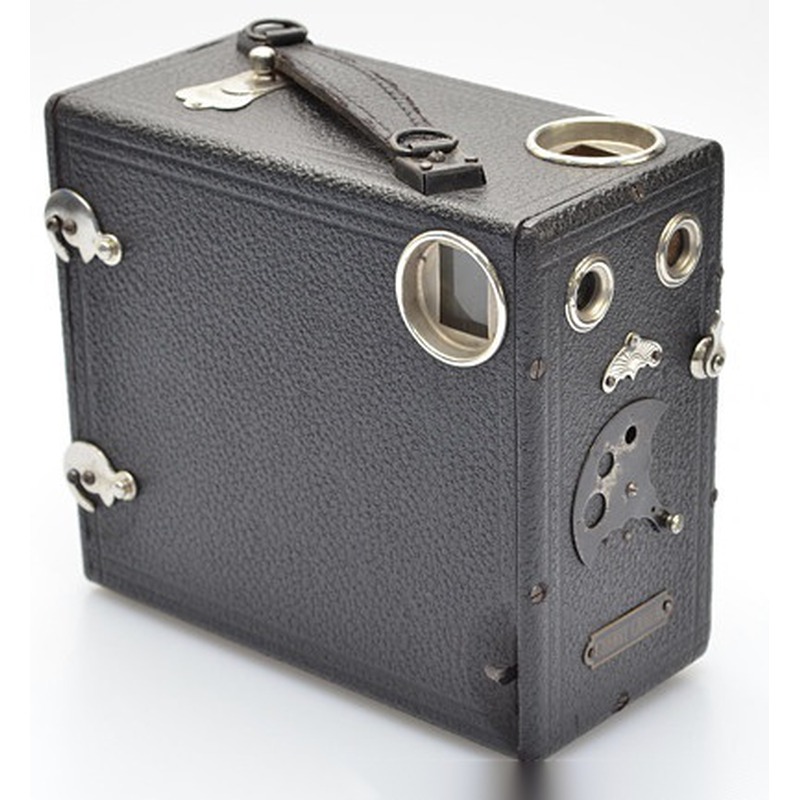
Konica Cherry II
Konica · Japan · 1904 · 135 film
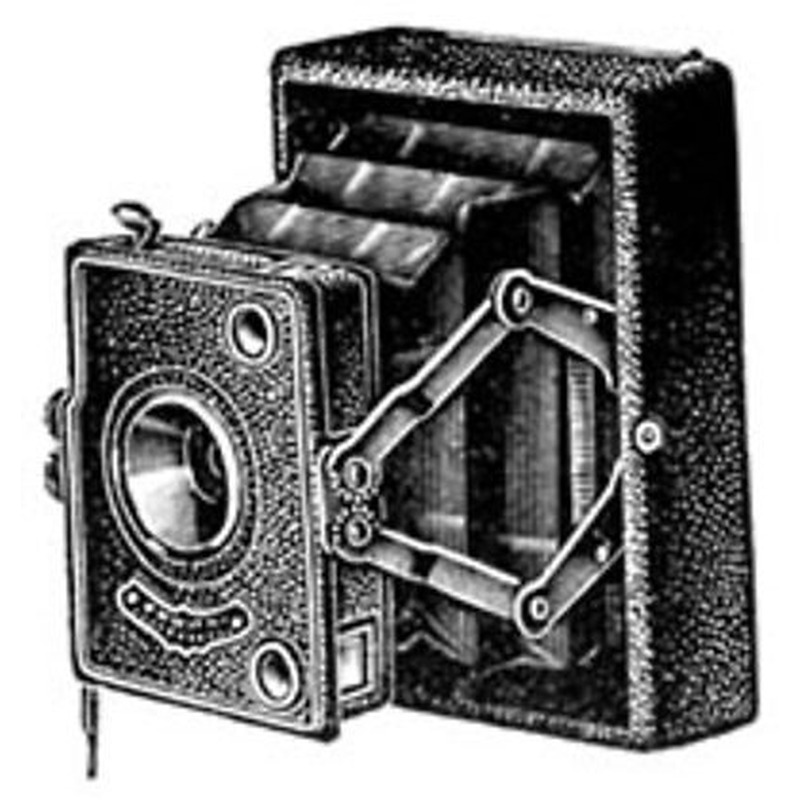
The Konica Cherry II, introduced in 1904, represents an exceptionally early application of the 35mm film format for a handheld camera. While predating the widely recognized Leica I by over two decades, the Cherry II exemplifies the nascent phase of miniature photography experimentation. Likely featuring a simple, compact body constructed from metal and leatherette, it would have utilized a focal plane shutter or a simpler leaf shutter system. As a 35mm camera, its primary innovation lay in utilizing the then-novel film format intended initially for motion pictures, adapting it for still photography in a portable form factor. This positioned it alongside other pioneering efforts, signifying a crucial step towards making photography more accessible and less cumbersome for amateur photographers.
The Cherry II operated on 35mm perforated film, likely yielding smaller negatives compared to larger plate cameras of the era. Its design would have prioritized basic functionality over sophisticated controls, reflecting the technological constraints of the early 1900s. While details of its specific lens and viewfinder systems are scarce without further research, its existence highlights Konica's (then Konishiroku) involvement in the foundational period of 35mm camera development. It stands as a testament to the early drive to miniaturize photographic equipment, paving the way for the revolutionary compact cameras that would dominate the latter half of the 20th century, even if its own commercial impact or specific technical influence is less documented than its iconic successors.
Specifications
| Film Format | 135 |
/main.jpg)
 Enjoy this museum? Support on Ko-fi