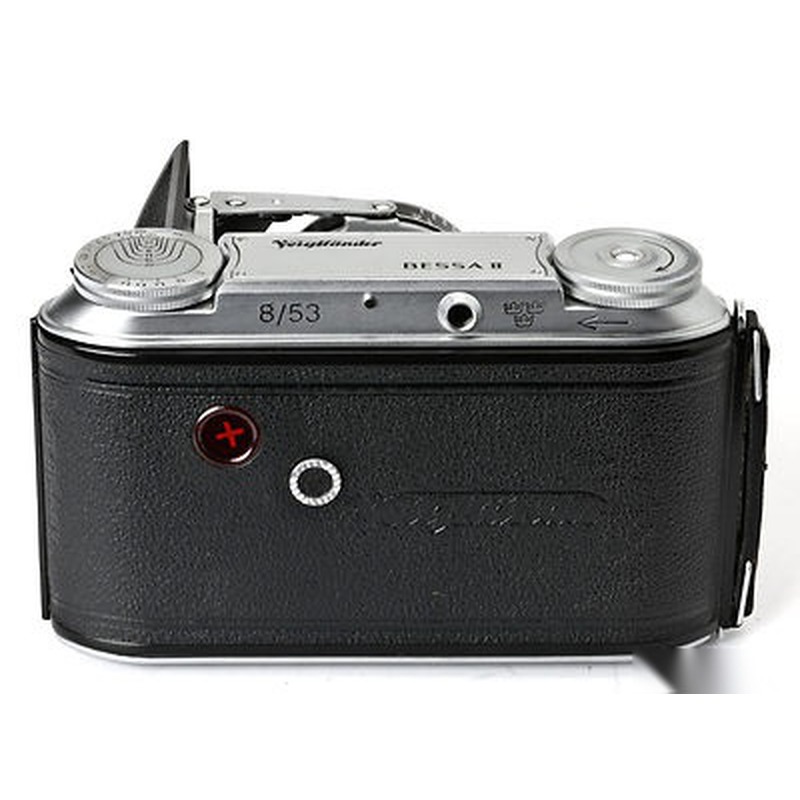
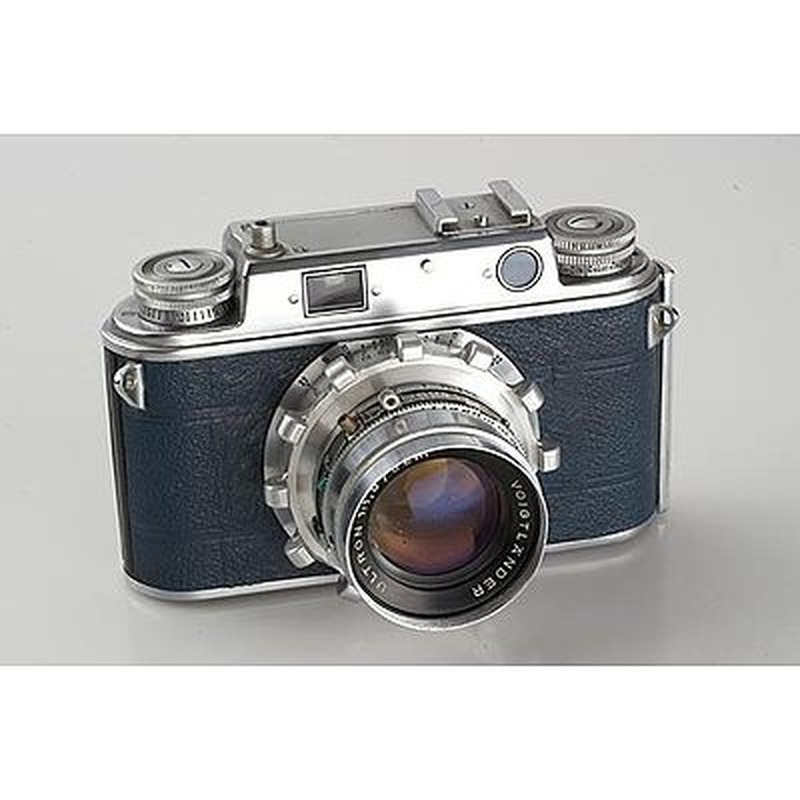
Voigtlander Bessa II 'three crowns'
Voigtlander · Germany · 1953 · 135 film
The Voigtlander Bessa II 'three crowns', introduced in 1953, represents a significant mid-range offering in the post-war 35mm camera market. Building on Voigtlander's established rangefinder heritage, it features a robust metal body construction typical of the era, likely incorporating a coupled rangefinder system for precise focusing. Designed for serious enthusiasts and professionals seeking an alternative to premium models, it utilized a reliable focal-plane shutter with speeds probably ranging from 1 second to 1/1000th, along with interchangeable lenses via a proprietary or standard bayonet mount. The 'three crowns' designation, often appearing on the top plate, signified its position within Voigtlander's lineup above entry-level models but below the high-end Prominent series, emphasizing its quality and advanced features for the time.
This camera operated on 135 (35mm) film, reflecting the format's growing dominance. While sharing core rangefinder DNA with its contemporaries, the Bessa II offered a practical and well-engineered solution without the premium cost or exclusivity of brands like Leica. Its production period coincided with Voigtlander's transition to modern manufacturing, marking an important chapter in the company's efforts to maintain competitiveness. It provided a reliable, feature-rich tool for photographers valuing German engineering and build quality without needing the top-tier model, filling a crucial niche in the mid-20th century camera landscape. Its design and specifications exemplify the technological and market realities of the early 1950s 35mm market.
Specifications
| Film Format | 135 |
/main.jpg)
 Enjoy this museum? Support on Ko-fi