/main.jpg)
Pricing
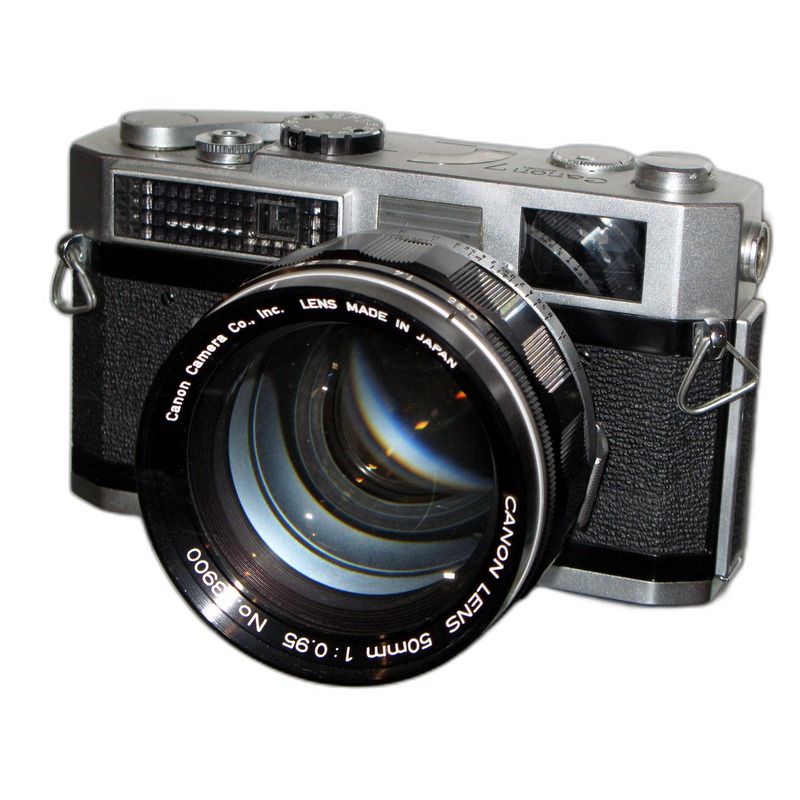
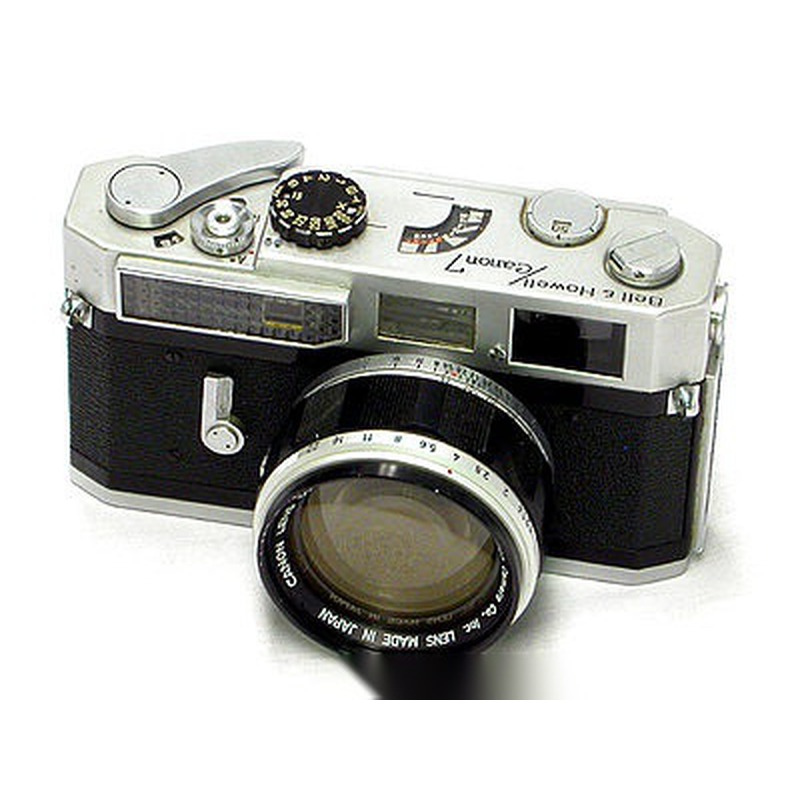
Canon 7 (Chrome with 0.95 50mm lens)
Canon · Japan · 1961–1964 (3 years) · 135 film
The Canon 7 was Canon's flagship rangefinder camera introduced in 1961, representing the company's most serious challenge to European dominance in the 35mm rangefinder market. Designed as a more advanced version of the Canon 7S, it featured a coupled rangefinder system with bright frame lines and offered compatibility with Canon's FL-mount lenses. Its most remarkable characteristic was its availability with the f/0.95 50mm lens, one of the fastest standard lenses ever produced for 35mm photography, allowing exceptional low-light capabilities and extremely shallow depth of field. The camera incorporated several innovations for its time, including an internal meter (in later versions) and a unique bayonet mount system that facilitated quick lens changes. While not achieving the legendary status of competing Leica models, the Canon 7 demonstrated Japanese engineering prowess and represented an important milestone in Canon's development toward becoming a major camera manufacturer.
As a professional-grade rangefinder, the Canon 7 was built with quality materials featuring a robust metal chassis and precision-mechanics that ensured reliable operation. It appealed to photojournalists and serious amateurs who valued its compact size combined with high-performance capabilities. The combination of the fast f/0.95 lens with the rangefinder's quiet operation made it particularly suitable for discreet photography in challenging lighting conditions. Though production ended in 1964 after only a few years, the Canon 7 established technical precedents that influenced subsequent Canon designs and remains an important piece of photographic history showcasing Japan's growing photographic industry.
Specifications
| Film Format | 135 |
/main.jpg)
/main.jpg)
/main.jpg)
 Enjoy this museum? Support on Ko-fi