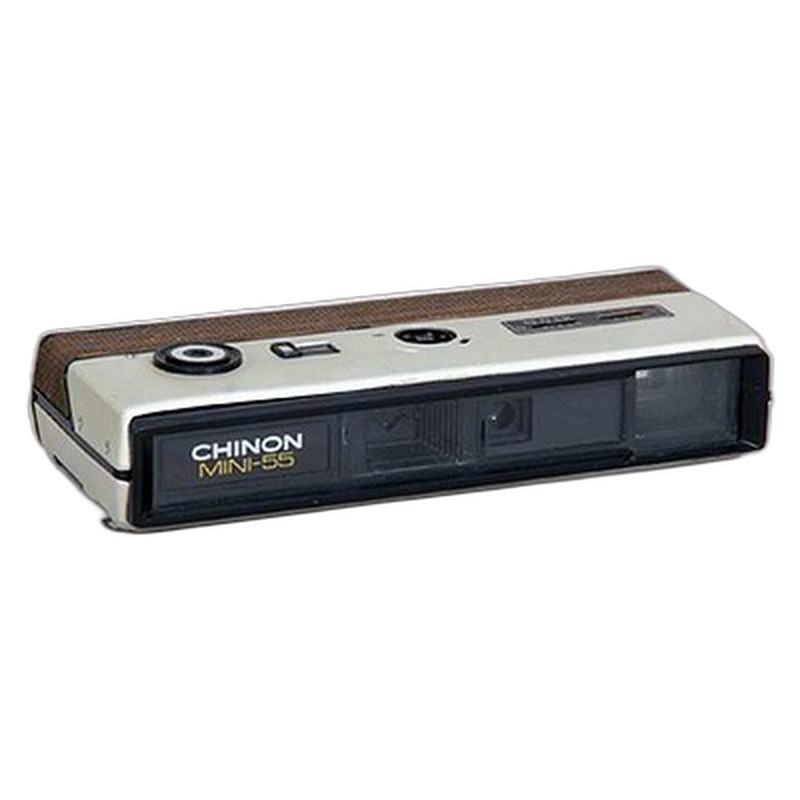
Chinon Mini 55
Chinon · Japan · 1974 · 135 film
Introduced in 1974, the Chinon Mini 55 represents a typical example of the compact 35mm camera market during the 1970s. As a fixed-lens viewfinder camera, it offered straightforward operation for casual photographers, focusing on affordability and portability. Its "Mini" designation likely emphasized its relatively small and lightweight body compared to larger SLRs or rangefinders of the era. Targeted at the mass market, it prioritized ease of use over advanced features, employing a simple shutter speed selection and built-in exposure meter to handle common shooting conditions. Constructed primarily of plastic with basic metal components, it fulfilled the need for an inexpensive, reliable point-and-shoot device for snapshots and everyday photography.
The Mini 55 exemplifies the wave of consumer-grade 35mm cameras that became ubiquitous in the 1970s, a period dominated by Japanese manufacturers like Chinon. While it incorporated standard features of its class, such as a fixed focal-length lens and automatic or programmed exposure modes (depending on the specific variant), it did not introduce any groundbreaking technological innovations or achieve widespread cultural recognition. Its existence is part of the broader narrative of democratising photography, making 35mm film accessible to a broader audience through practical, unpretentious designs. It remains a functional snapshot of camera manufacturing priorities during that decade, serving its purpose competently without leaving a significant mark on photographic history.
Specifications
| Film Format | 135 |
 Enjoy this museum? Support on Ko-fi