/main.jpg)
Pricing
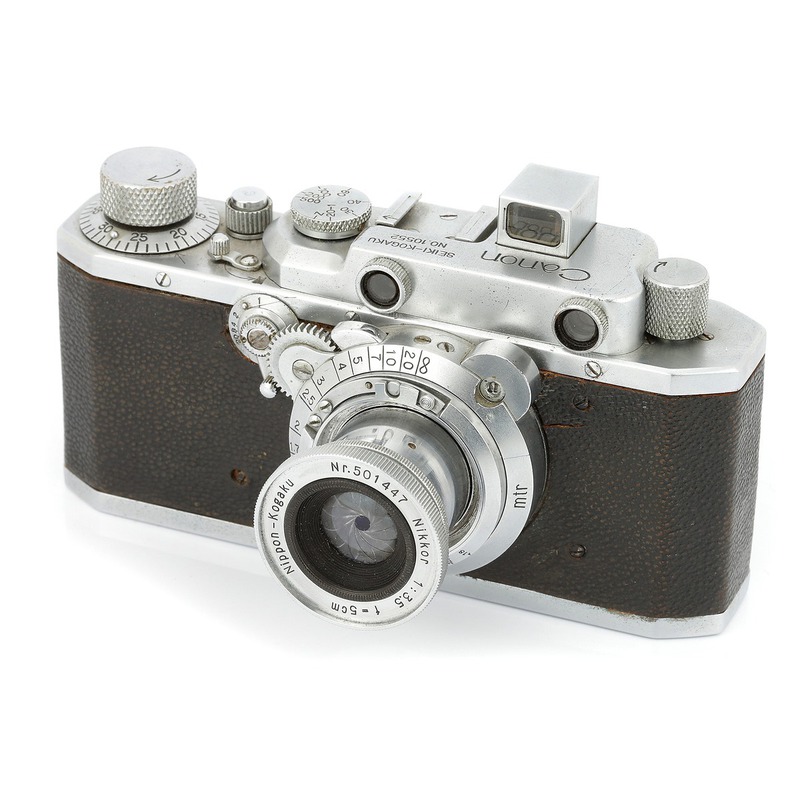
Canon J (Seiki Kogaku)
Canon · Japan · 1939–1944 (5 years) · 135 film
The Canon J (Seiki Kogaku) represents Canon's early entry into the competitive 35mm camera market, produced during a critical and difficult period from 1939 to 1944. As one of Canon's first 135-format cameras, it emerged when the company was still operating under its original Japanese name, Seiki Kogaku Kogyo. This camera positioned Canon alongside other established Japanese makers offering alternatives to the dominant European models like Leica. While specific details about its exact design features are scarce in the provided information, Canon J models of this era typically featured a coupled rangefinder for focusing, a focal plane shutter offering a range of speeds, and accepted standard 35mm film cassettes. Production occurred amidst the constraints of World War II, influencing materials availability and manufacturing techniques, which likely impacted its build quality and finish. The Canon J was designed as a functional, relatively accessible 35mm camera, contributing to Canon's foundation before the post-war surge in camera development that would later establish them as a major global brand.
Surviving examples offer a glimpse into early Japanese camera manufacturing. Its construction, while not renowned for exceptional robustness typical of contemporary high-end European cameras, reflected Canon's capability to produce a functional rangefinder camera at an accessible price point. The Canon J played a part in democratizing 35mm photography during a tumultuous time, albeit without the technological innovations or iconic status of later legendary models. Its historical importance lies primarily in its role as a foundational product from Seiki Kogaku/Canon, demonstrating the company's commitment to the 35mm format during its formative years and the challenging wartime period.
Specifications
| Film Format | 135 |
/main.jpg)
/main.jpg)
/main.jpg)
/main.jpg)
/main.jpg)
 Enjoy this museum? Support on Ko-fi