Pricing
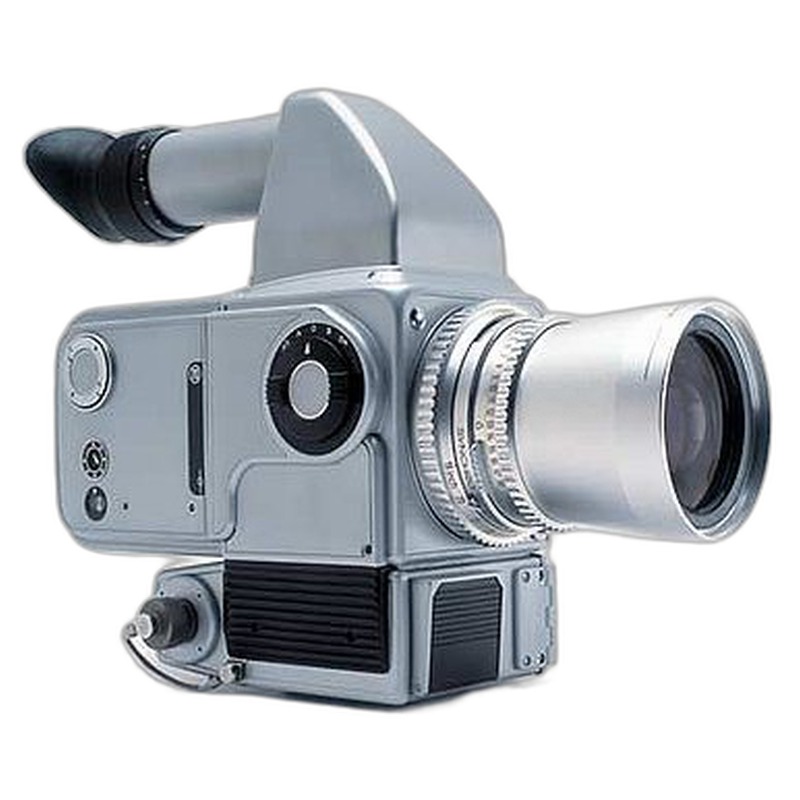
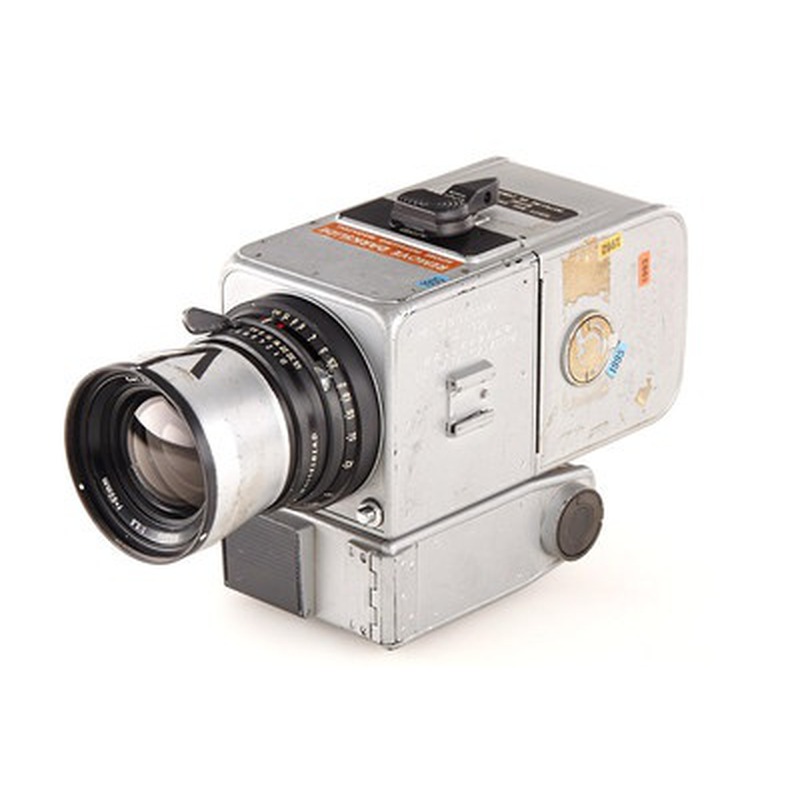
Hasselblad 500 EL Electronic 'Lunar Surface'
Hasselblad · Sweden · 1969 · 120 film
The Hasselblad 500 EL Electronic 'Lunar Surface' represents one of the most pivotal and historically significant cameras ever created. Released in 1969 specifically for NASA's Apollo program, this medium format camera was engineered to document humanity's first steps on another celestial body. The "EL" designation denoted its electronic capabilities with a motorized winder system, allowing astronauts to advance the film easily while wearing bulky space gloves. The camera underwent rigorous modifications including special lubricants to withstand extreme temperature variations, simplified controls for operation in pressurized suits, and a silver finish to manage lunar thermal conditions. These purpose-built Hasselblads, attached to astronauts' chests with custom brackets, captured the iconic images that would define the human achievement of space exploration for generations.
The design innovations of the 500 EL Electronic were born out of necessity and collaboration between Hasselblad's engineers and NASA scientists. Rather than using a traditional reflex mirror to prevent vibrations in zero gravity, the camera employed a leaf shutter system. It was paired with a Zeiss Biogon 60mm lens and a 70mm film magazine that could hold up to 150 exposures, providing the astronauts with sufficient film to document their mission without frequent reloading. The motorized film advance system represented a significant advancement in medium format photography, allowing for rapid sequential shooting—a crucial feature when capturing the fleeting moments of historic significance on the lunar surface. Each camera used on the Moon was a modified version of the standard 500 EL, with several additional features specifically designed for the unique challenges of space photography.
The camera's most famous user was Neil Armstrong, who used a modified 500 EL Electronic to capture the historic images of Buzz Aldrin's first steps on the Moon during the Apollo 11 mission in July 1969. The camera's design ensured that even when set on the lunar surface without a tripod, it could still function reliably. After the mission, NASA famously left the cameras on the Moon to reduce weight for the return journey, sacrificing equipment for sample collection. The photographs taken with these cameras—like the famous "Buzz Aldrin on the Moon" showing Aldrin in his space suit with the reflected image of Armstrong in his helmet visor—have become some of the most recognizable images in human history, documenting not just technological achievement but profound moments of human exploration and discovery.
Specifications
| Film Format | 120 |
/main.jpg)
/main.jpg)
/main.jpg)
/main.jpg)
 Enjoy this museum? Support on Ko-fi