Pricing
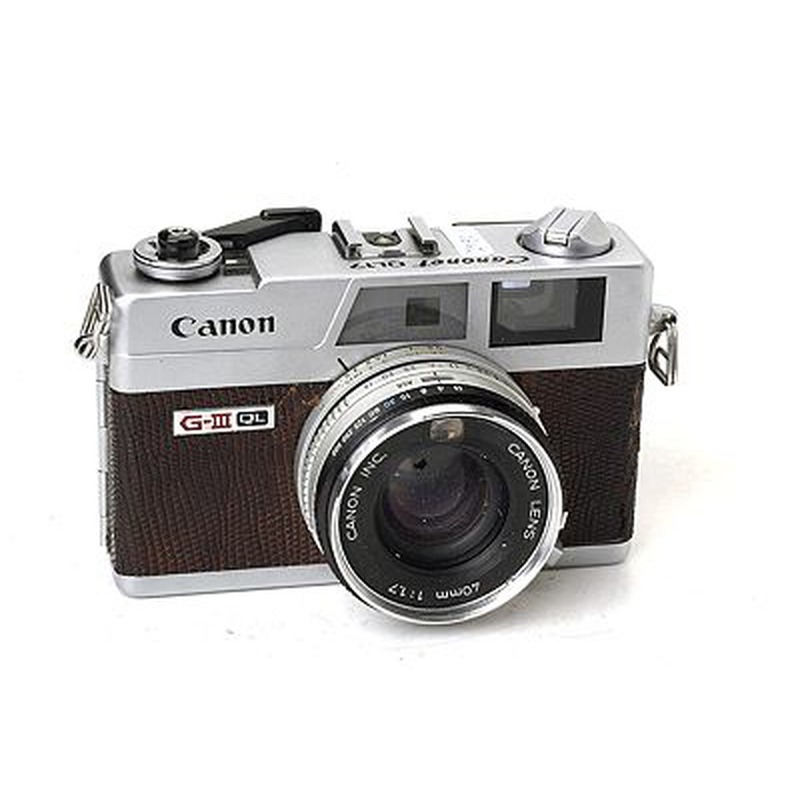
Canonet G III QL17
Canon · Japan · 1972 · 135 film
The Canonet G III QL17 represents Canon's third generation of its popular Canonet series, launched in 1972 as a refined successor to the original and New Canonet models. Designed as a consumer-grade rangefinder camera, it offered sophisticated features at a relatively accessible price point, bridging the gap between entry-level point-and-shoots and professional rangefinders. The camera's 45mm f/1.7 Canon lens (not 35mm as mistakenly suggested in the provided info) was renowned for its sharpness and wide aperture, while its coupled rangefinder system provided accurate focusing critical for rangefinder photography. The G III QL17 distinguished itself with shutter-priority automatic exposure, making it easier for photographers to control motion blur while the camera handled aperture selection, complemented by full manual mode for creative control. Its "QL" designation referred to Canon's Quick Loading system, which simplified film loading—an important feature at a time when many cameras still required meticulous film threading. The leaf shutter allowed for flash synchronization at all shutter speeds, a practical advantage over focal plane shutters found in SLRs of the era.
The Canonet G III QL17 was part of Canon's strategy to offer professional-quality features to a broader market during the 1970s photography boom. Its combination of a high-quality lens, reliable rangefinder system, and user-friendly automatic/manual exposure control made it particularly popular among serious photographers and enthusiasts who wanted the precision of rangefinder focusing without the cost of high-end European models. The camera's robust metal construction and thoughtful ergonomics contributed to its reputation for durability and ease of use, helping establish Canon as a leader in the photographic industry during this period. Though it never achieved the cult status of some professional rangefinders, the Canonet G III QL17 enjoyed considerable commercial success and remains respected today as an excellent example of 1970s Japanese camera engineering.
Specifications
| Film Format | 135 |
/main.jpg)
 Enjoy this museum? Support on Ko-fi