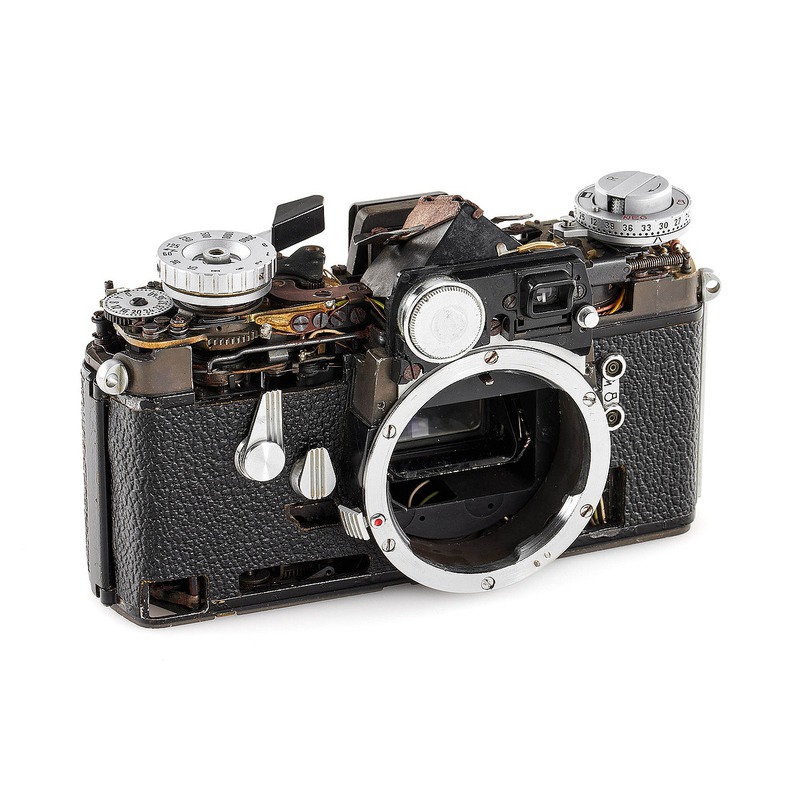
Leicaflex Cut-Away
Leica · Germany · 1964 · 135 film
The Leicaflex Cut-Away is a highly specialized, one-off variant of Leica's first single-lens reflex camera, the Leicaflex (Model 1), introduced in 1964. Unlike the production models intended for photographers, the Cut-Away served as an educational and promotional demonstration piece. Its defining feature is the transparent acrylic sections cut away from the camera's magnesium alloy body, meticulously revealing the intricate internal mechanics of the focal plane shutter and mirror assembly. This "cut-away" design allowed Leica to showcase its engineering prowess and the complex workings of the SLR system to dealers, distributors, and potentially educational institutions. While externally resembling a standard Leicaflex with its distinctive right-hand film advance lever and top-mounted exposure meter, the Cut-Away's primary purpose was not photography but illustration, making it a unique artifact rather than a functional tool. Its rarity stems directly from this bespoke nature; only a handful were reportedly produced, primarily for internal Leica use or key trade show presentations.
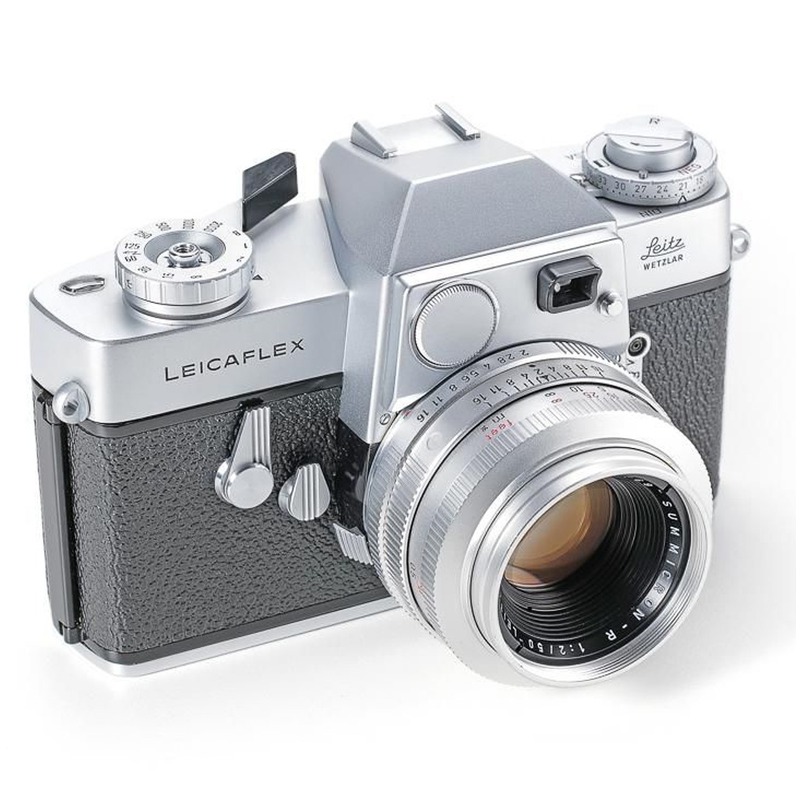
Although sharing its core mechanics with the standard Leicaflex, such as the reliable cloth focal-plane shutter and the excellent 50mm Summicron-R f/2 lens mount, the Cut-Away's value lies almost exclusively in its demonstrative function and extreme scarcity. It represents a moment in Leica's history where the company explicitly chose transparency – both literally and figuratively – to highlight the technical sophistication of its new SLR platform, which was Leica's direct response to the burgeoning popularity of Japanese SLRs. This unique demonstrator provides a fascinating glimpse into Leica's marketing and training practices of the era, offering a tangible connection to the engineering challenges and solutions involved in creating a high-quality mechanical SLR. Its existence underscores the transition point for Leica into the SLR market, making it more historically significant as a piece of Leica's internal history and a curiosity among collectors than as an influential camera model in broader photographic development.
Specifications
| Film Format | 135 |
/main.jpg)
/main.jpg)
/main.jpg)
 Enjoy this museum? Support on Ko-fi