_black/main.jpg)
Pricing
Exakta A (Original) black
Exakta · Germany · 1933–1938 (5 years) · 135 film
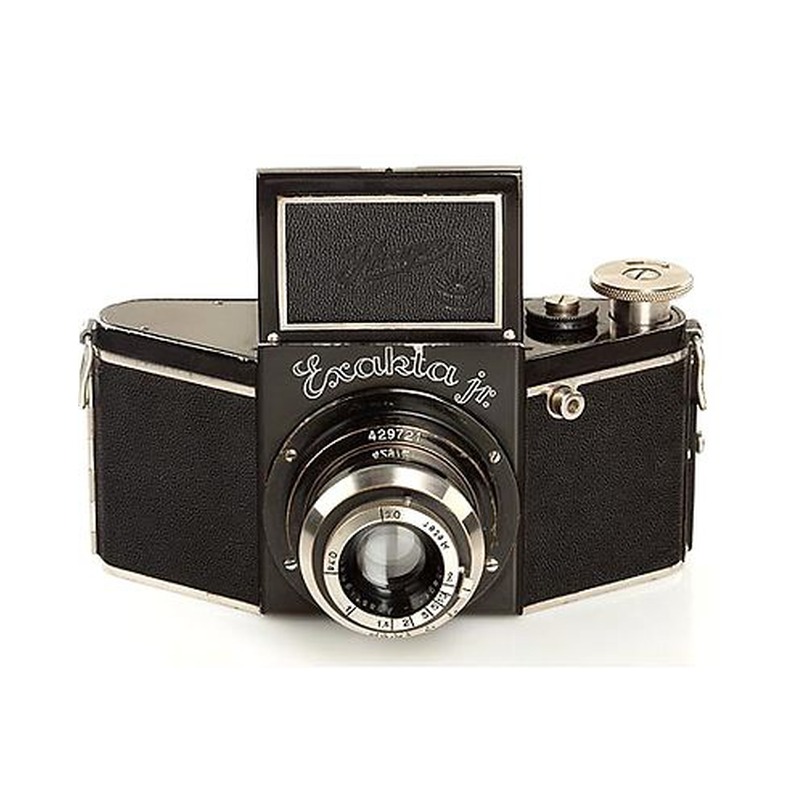
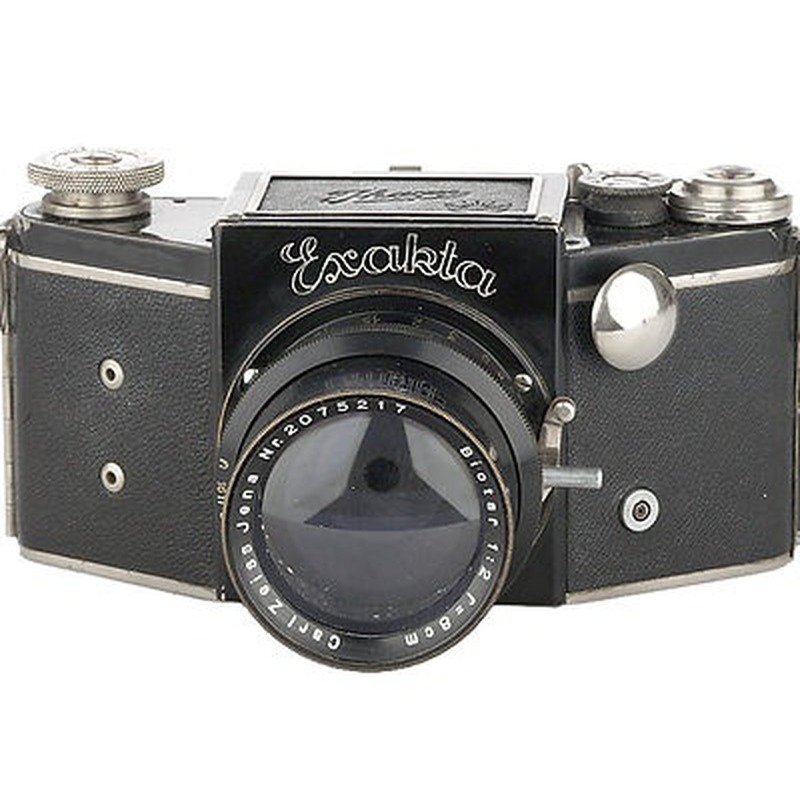
The Exakta A (Original) black represents a pivotal yet often overlooked chapter in photographic history. Produced by Ihagee Kamerawerk Dresden from 1933 to 1938, it stands as one of the very first commercially successful 35mm single-lens reflex (SLR) cameras to reach the market. Building upon the earlier Kine Exakta, this model cemented Exakta's reputation as a pioneer of the SLR format, crucial for popularizing reflex viewing among photographers transitioning from smaller viewfinder cameras. Its robust, all-metal construction featured a focal-plane shutter offering a wide speed range and a unique, somewhat complex design that facilitated the interchangeable lens system, a defining characteristic of the Exakta lineage. While lacking the refinement and widespread brand recognition of later icons, the Exakta A demonstrated the viability of the SLR concept for serious amateur and professional work, paving the way for future generations of SLRs that would dominate the market.
Operating the camera required a specific technique; the waist-level finder, which projected the image onto a ground glass screen via a hinged reflex mirror, provided a laterally reversed image requiring compositional adjustment. Despite this quirk, the Exakta A offered significant advantages over contemporary rangefinder cameras, such as direct viewing through the taking lens and the potential for macro and long-lens photography facilitated by the mirror movement. Its production period pre-dated the vast majority of modern SLRs, making it a direct ancestor to cameras that would fundamentally change photographic practice. While not as universally famous or user-friendly as the Leica or Contax rangefinders of its era, or the post-war Nikon F, the Exakta A holds a significant place as a foundational model that proved the SLR could be a practical and powerful tool.
Specifications
| Film Format | 135 |
/main.jpg)
/main.jpg)
/main.jpg)
/main.jpg)
 Enjoy this museum? Support on Ko-fi