/main.jpg)
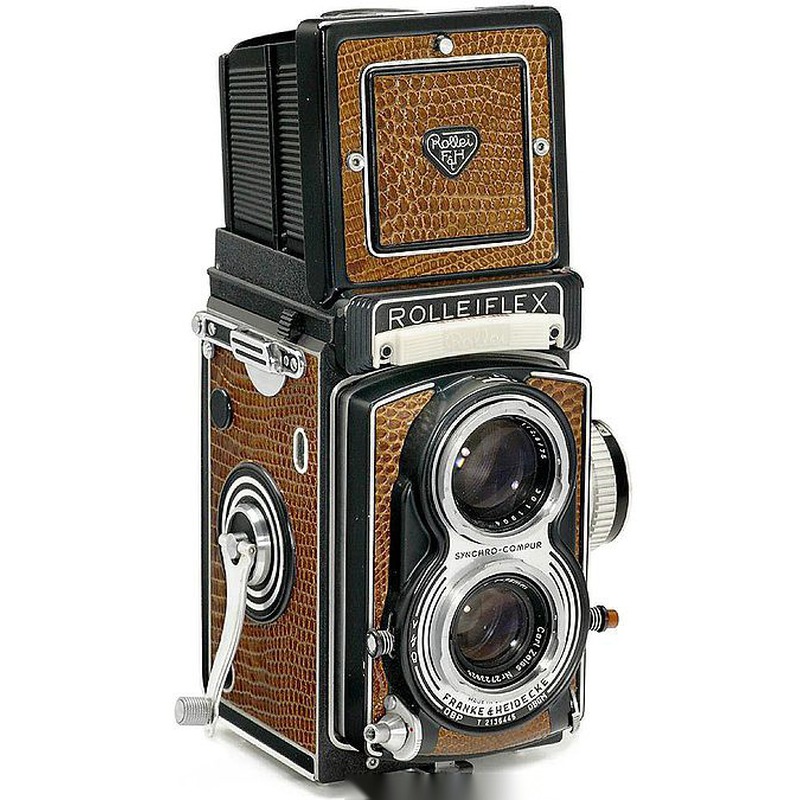
Rolleiflex 2.8 Cut-Away (half)
Rollei · Germany · 1960 · 120 film
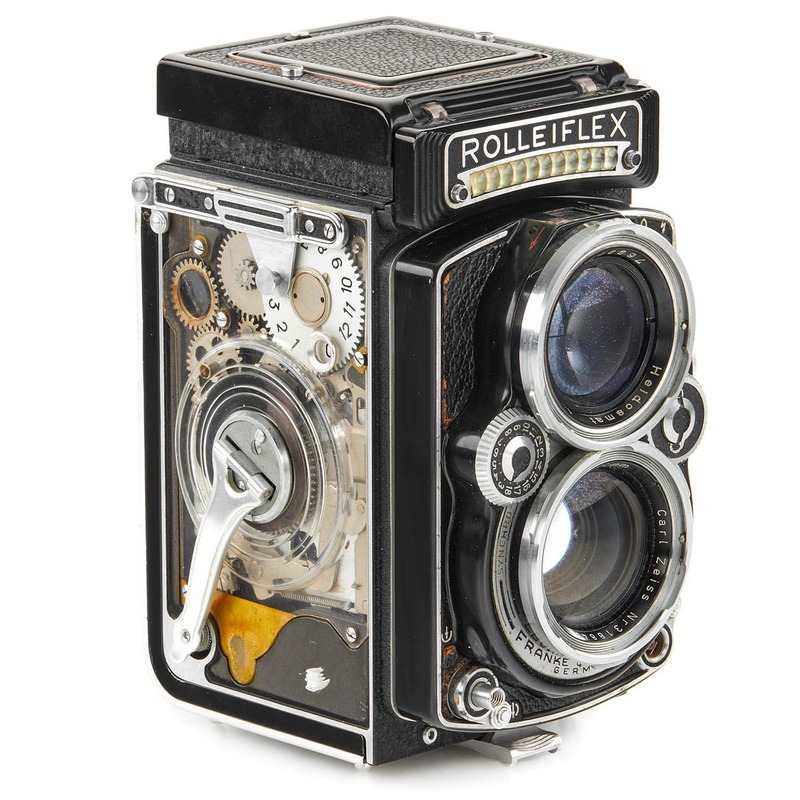
Introduced in 1960, the Rolleiflex 2.8 Cut-Away (half) by Rollei is a unique variant of the iconic Rolleiflex 2.8F medium format twin-lens reflex (TLR) camera. Unlike its standard production counterparts intended for general photography, the Cut-Away model served a specialized purpose as a demonstration unit. Its defining characteristic is the extensive removal of metal plating and components on its left side, meticulously exposing the intricate internal mechanics of the camera body. This "cut-away" design, applied only to half the camera, allowed instructors, technicians, and sales representatives to visually showcase the complex interplay of gears, shutter mechanisms, film transport system, and focusing screen assembly that were normally hidden beneath the camera's iconic black enamel covering. It functioned essentially as a detailed anatomical model or a technical teaching aid.
As a demonstrator, the Cut-Away shared the core specifications of the contemporary Rolleiflex 2.8F, including its excellent 75mm f/2.8 Zeiss Planar or Schneider Xenotar lens and its use of 120 film for producing 6x6 cm negatives. However, its construction was inherently compromised by the extensive modifications; it lacked the full protective outer casing, was not sealed against dust or moisture, and its operational functionality was likely secondary to its visual appeal as a technical exhibit. Consequently, it was never intended as a practical photographic tool for professionals or serious amateurs but rather as a highly specialized instrument for education and sales presentations within Rollei and the photographic industry. Its production was extremely limited, making it a genuine rarity today.
Specifications
| Film Format | 120 |
/main.jpg)
 Enjoy this museum? Support on Ko-fi