/main.jpg)
Pricing
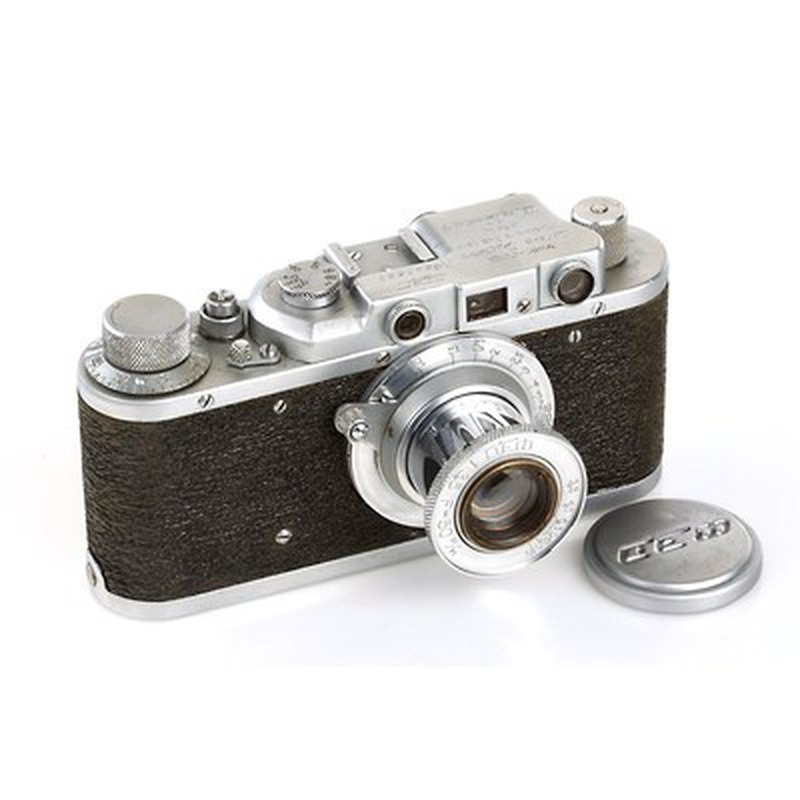
FED-2 (Type c)
FED · Ukraine
The FED-2 (Type c) represents a significant iteration in the evolution of Soviet Leica-inspired rangefinder cameras, produced by the Kharkov-based FED factory following the post-WWII era. Building upon the foundational FED and FED-2 models, the Type c variant incorporated refinements over earlier versions, notably a self-cocking shutter mechanism and improved viewfinder/rangefinder windows offering brighter images and better parallax correction. It maintained the core design philosophy of the FED line: a compact, all-metal body housing a coupled rangefinder and focal-plane shutter, making it a practical and relatively affordable tool for Soviet amateur photographers and documentary work during the mid-20th century. While lacking the precision or prestige of contemporary German or Japanese equivalents, the FED-2 (Type c) was a robust workhorse embodying the capabilities and limitations of Soviet mass-produced photographic equipment at the time. It served reliably for everyday photography, documentary purposes, and basic photojournalism within the Eastern Bloc for several years of production.
As a mechanical rangefinder camera, it utilized readily available 35mm film and offered shutter speeds from 1/25s to 1/500s plus "B" (bulb), alongside standard apetures controlled via the lens. Its design focused on functionality and ease of use for the intended market, featuring simplified controls and a utilitarian aesthetic. The camera holds historical value primarily as an example of Soviet industrial design and photographic technology, illustrating the nation's drive to provide accessible photographic equipment to its citizens during the Cold War era. It represents a chapter in the long lineage of FED/Zorki cameras, contributing to the widespread use of Leica-type rangefinders globally before the dominance of SLRs. While not a groundbreaking innovator, the FED-2 (Type c) was a durable and capable instrument that fulfilled a significant role in Soviet photographic practice.
/main.jpg)
_black/main.jpg)
/main.jpg)
_(NKVD)/main.jpg)
_(NKVD)/main.jpg)
 Enjoy this museum? Support on Ko-fi