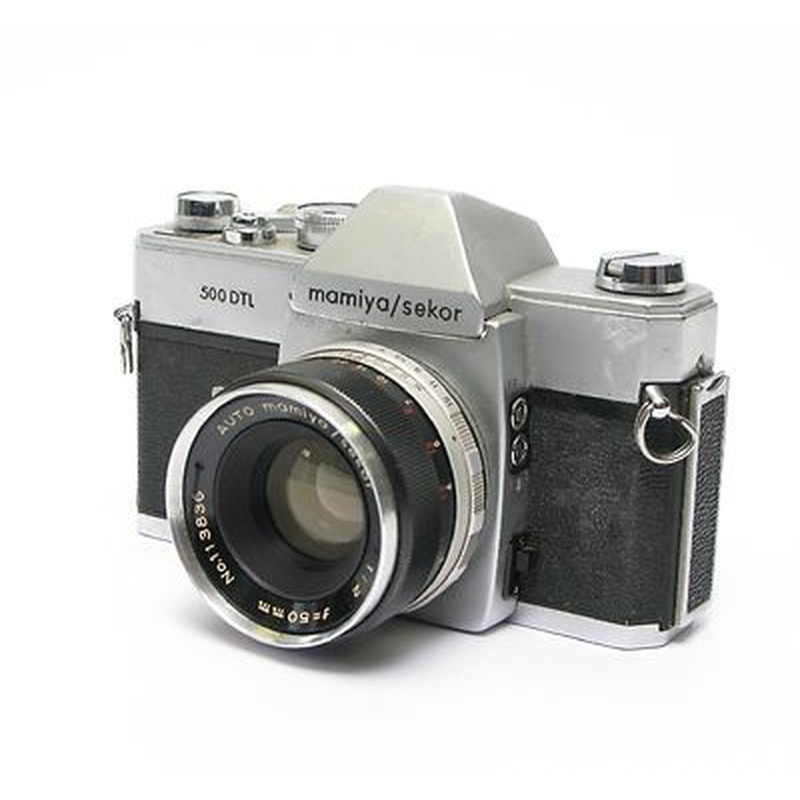
Mamiya Sekor 500 DTL
Mamiya · Japan
The Mamiya Sekor 500 DTL is a 35mm single-lens reflex (SLR) camera produced by Mamiya during the 1960s or early 1970s. As part of Mamiya's Sekor series, which denoted their more accessible SLR models, the 500 DTL offered a solid entry into the world of 35mm SLR photography. It featured a standard pentaprism viewfinder for eye-level composition and a through-the-lens light meter, likely a needle-based match-needle system common to contemporary budget SLRs. The camera utilized Mamiya's proprietary Sekor-mount lenses, providing a range of affordable options for everyday photographers. Its construction, typically with metal body panels and robust mechanics, reflected Mamiya's reputation for durability in this class, aiming for reliable performance at a competitive price point. While not featuring the advanced innovations of flagship models like Nikon F or Canon F1, the Sekor 500 DTL served its purpose as a dependable workhorse for enthusiasts and serious amateurs seeking a quality Japanese-made SLR without the premium cost.
Mamiya positioned the Sekor 500 DTL as a practical step-up camera for photographers graduating from simpler viewfinders or box cameras. It capitalized on the growing popularity of SLRs by offering essential features like TTL metering and a bright viewfinder within a sturdy, user-friendly package. Its significance lies in being part of Mamiya's broader strategy to diversify beyond their renowned medium format cameras and capture a share of the expanding 35mm SLR market during a dynamic period in photographic history. It represents a reliable, well-engineered option from a respected Japanese manufacturer, embodying the accessible quality that defined many successful consumer SLRs of its era.
/main.jpg)
/main.jpg)
/main.jpg)
 Enjoy this museum? Support on Ko-fi