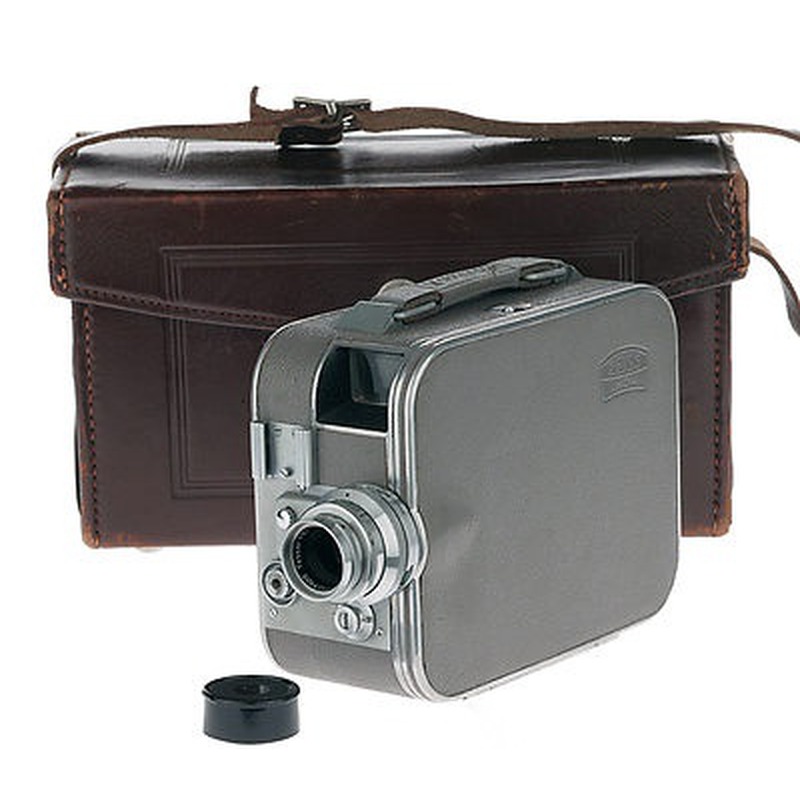
Zeiss Movikon K16
Zeiss · Germany · 1937 · 135 film
The Movikon K16 represents Zeiss's entry into the burgeoning 35mm still camera market in 1937, utilizing the standardized 135 film cassette that was rapidly gaining popularity. While specific details about its exact model type (e.g., rangefinder, viewfinder) are not preserved in the provided information, its significance lies in its place as a product from the renowned German optical and precision engineering giant during a pivotal pre-war period. Constructed with Zeiss's characteristic attention to mechanical precision, the K16 likely featured a reliable shutter system and a high-quality lens, embodying the company's commitment to optical excellence accessible to a broader segment of photographers than their more specialized or expensive models. Its production in 1937 places it firmly within the era that saw 35mm film transition from movie stock to a viable format for still photography, though its specific innovations or market position relative to contemporaries like Leica or Contax remain unclear from the known data.
As a product of Zeiss Ikon, the K16 contributed to the diversification of 35mm camera options available to consumers and serious amateurs in the late 1930s. Its release underscores Zeiss's strategy to compete within the expanding 135 format sector, leveraging their optical expertise to provide a functional and well-built camera. While not remembered as a landmark design or pushing significant technological boundaries, its existence highlights the robust German camera industry just prior to World War II and the growing accessibility of high-quality, smaller format photography outside the realm of specialized professional equipment or ultra-premium brands. It serves as a representative example of competent 1930s 35mm engineering from a major manufacturer.
Specifications
| Film Format | 135 |
/main.jpg)
_prototype/main.jpg)
 Enjoy this museum? Support on Ko-fi