Pricing
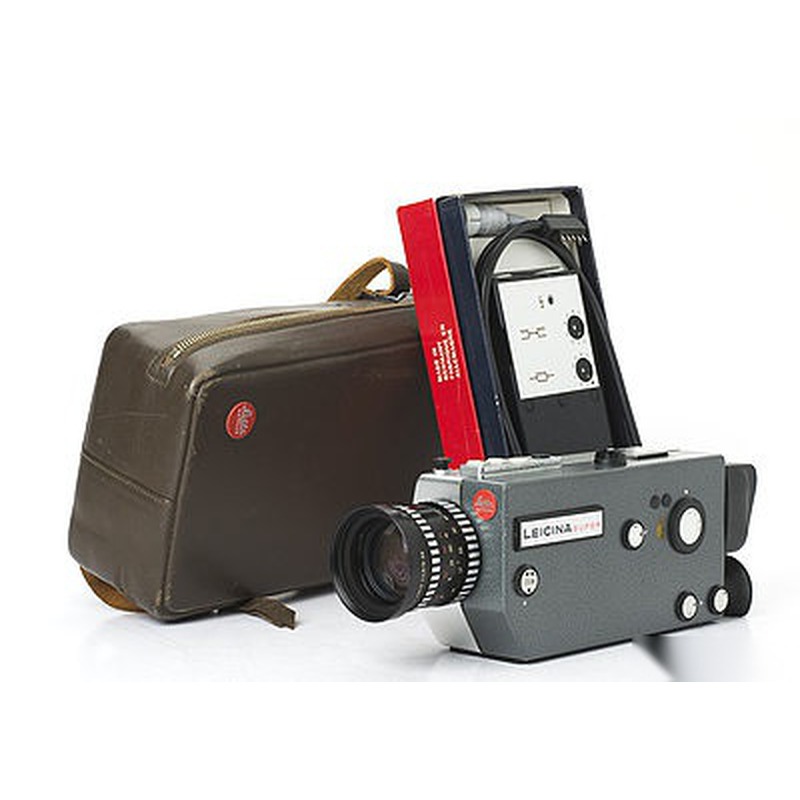
Leica Leicina Super
Leica · Germany · 1969–1973 (4 years) · 135 film
The Leicina Super was a specialized 16mm motion picture camera produced by Leica from 1969 to 1973, representing the company's entry into the amateur cine market. Designed as a single-system camera, it featured a through-the-lens (TTL) reflex viewfinder and a unique rotating magazine allowing for rapid film changes without reloading. Its construction reflected Leica's high standards, utilizing robust metal alloy components and precision engineering. Key innovations included a focal-plane shutter with speeds from 8 to 1/500 second and an interchangeable lens mount, accepting Leica M39 screw-mount lenses via an adapter, offering flexibility to cinematographers. Marketed towards advanced hobbyists and semi-professionals, it stood out for its compact size relative to professional 16mm cameras and reliable build, positioning itself as a serious alternative to models from manufacturers like Beaulieu or Bolex.
While sharing Leica's reputation for quality, the Leicina Super remained a niche product in the cine world, overshadowed by the dominance of 8mm formats for home movies and the complexity of 16mm for professionals. Its production run was relatively short, and it lacked the widespread adoption or revolutionary impact that defined Leica's still camera innovations. Nevertheless, it holds a place as an example of Leica's engineering prowess applied to a different medium, valued today for its sturdy build and unique mechanical features by collectors of vintage cine equipment.
Specifications
| Film Format | 135 |
/main.jpg)
/main.jpg)
/main.jpg)
 Enjoy this museum? Support on Ko-fi