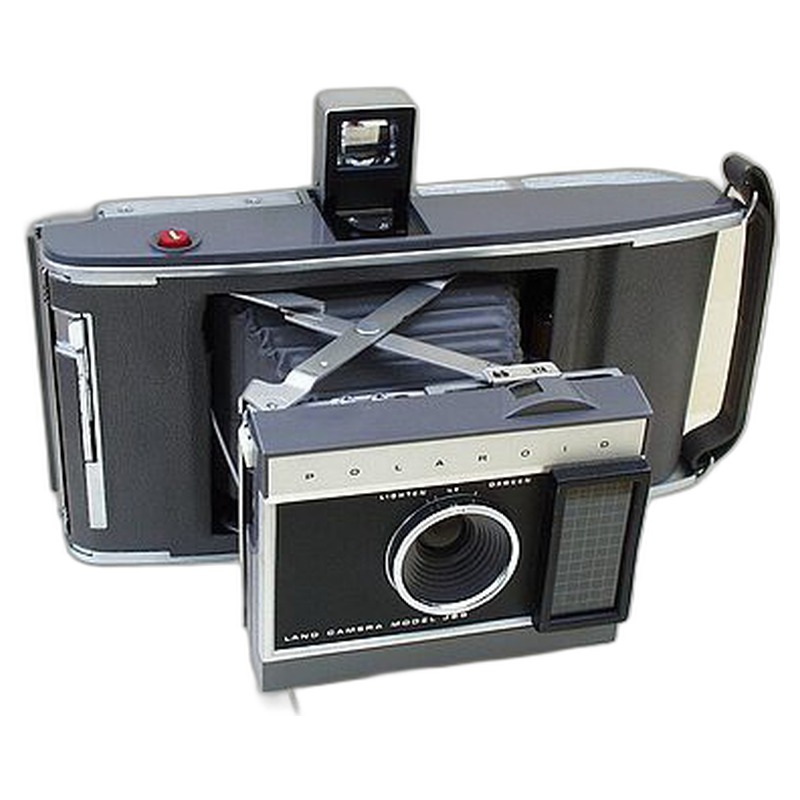
Polaroid J 66
Polaroid · USA · 1961–1963 (2 years) · Instant film
The Polaroid J 66 represents a straightforward entry-level instant camera produced by Polaroid during the early 1960s, a period when the company solidified its dominance in the instant photography market. Designed for casual users, it utilizes Polaroid's instant film technology, delivering the characteristic tangible, self-developing photographs that defined the era's appeal. Functionally, it likely embodies the core mechanics typical of mid-century Polaroid models: a simple viewfinder, a basic shutter system, and a straightforward film ejection process. While lacking the sophisticated engineering or iconic design elements of later Polaroid landmarks like the SX-70, the J 66 served its purpose as an accessible tool for capturing and instantly sharing snapshots, contributing to the democratization of photography before the digital age. Its production run from 1961 to 1963 places it within the foundational years of Polaroid's mass-market instant camera development.
As a member of Polaroid's consumer lineup, the J 66 prioritized ease of use and affordability over advanced features or premium construction. It exemplifies the "point-and-shoot" philosophy applied to instant photography, targeting individuals who valued immediate results over technical control or image quality. Its significance lies in its role within Polaroid's broader ecosystem, helping popularize instant imaging for everyday users during a crucial phase of the company's growth and before the advent of more complex or stylish models. The camera serves as a practical artifact reflecting the widespread adoption and social impact of instant photography in the early 1960s, even if it wasn't a groundbreaking innovation in its own right.
Specifications
| Film Format | Instant |
/main.jpg)
 Enjoy this museum? Support on Ko-fi