Pricing
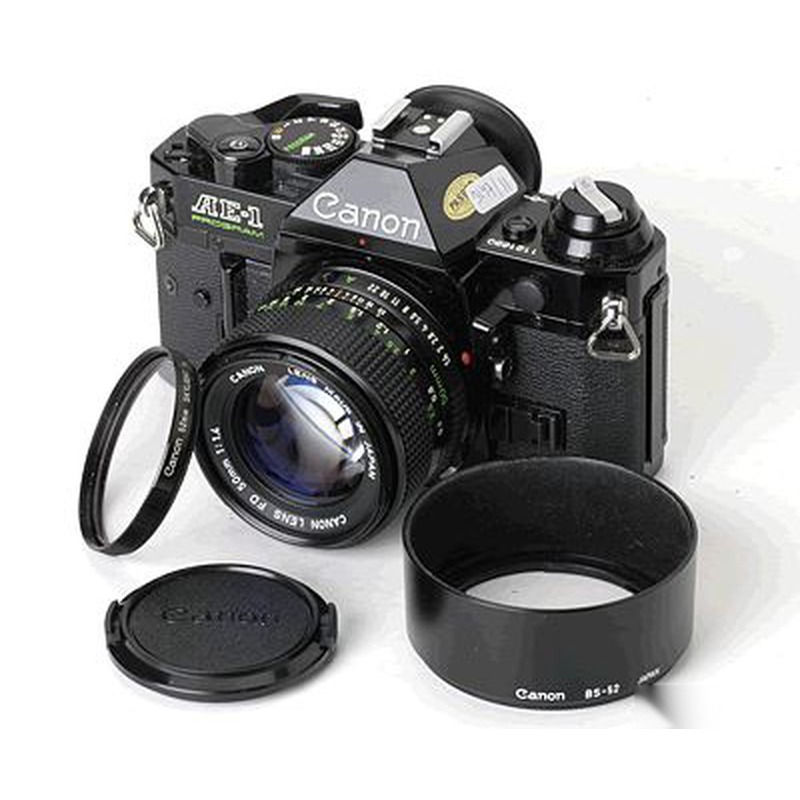
Canon AE-1 program
Canon · Japan · 1981 · 135 film
The Canon AE-1 Program, introduced in April 1981 as the successor to the groundbreaking Canon AE-1 of 1976, represents a significant evolution in consumer-level 35mm SLR photography. Building upon the technological foundation established by its predecessor, the AE-1 Program added sophisticated program auto exposure functionality, allowing the camera to automatically select both aperture and shutter speed for optimal exposure in most shooting situations. This made professional-level photography more accessible to amateur enthusiasts while maintaining the user-friendly design that had made the original AE-1 so popular during its five-year production run. The camera featured Canon's reliable FD lens mount system and incorporated a central processing unit to manage its exposure calculations, marking an important step in the computerization of photographic equipment during the early 1980s.
From a design perspective, the AE-1 Program retained the distinctive aesthetic of the original AE-1 while incorporating subtle refinements to its electronic and mechanical systems. The camera's black and silver construction combined durability with affordability, utilizing a combination of metal and high-quality plastic components that balanced cost with reliability. Its shutter speeds ranged from 1 second to 1/1000 second, with a synchronized flash speed of 1/60 second, and it featured both manual and automatic exposure modes to accommodate different shooting preferences. The program mode, in particular, represented Canon's commitment to simplifying complex photographic operations without sacrificing creative control, embodying the brand's philosophy of making advanced technology accessible to photographers at all skill levels.
The historical significance of the Canon AE-1 Program lies in its role within Canon's broader strategy to democratize photography through technological innovation and thoughtful design. As part of the AE-1 series, which collectively sold millions of units worldwide, it helped transition photography from a specialized hobby to a mainstream pursuit by bringing advanced features and reliable performance within reach of general consumers. The camera's influence extended beyond its commercial success, as its microprocessor-based design set the stage for increasingly sophisticated electronic cameras throughout the 1980s and beyond. Today, the AE-1 Program remains a respected classic among film photography enthusiasts, valued both for its historical importance as a bridge between mechanical and electronic camera eras and for its continued usability with modern photographic processes.
Specifications
| Film Format | 135 |
/main.jpg)
/main.jpg)
 Enjoy this museum? Support on Ko-fi