/main.jpg)
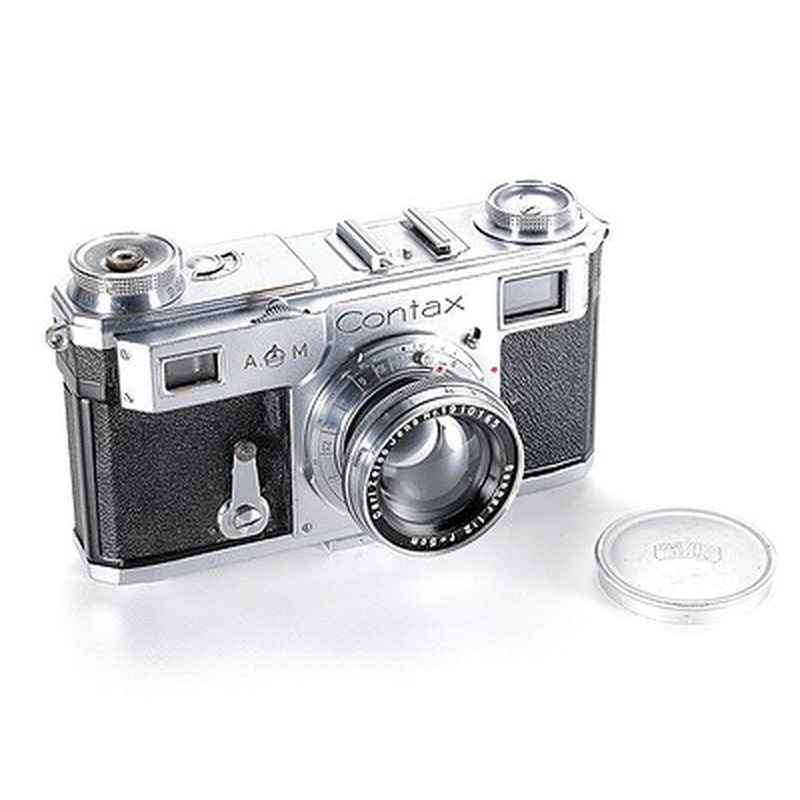
Zeiss Contax II (543/24)
Zeiss · Germany · 1936–1942 (6 years) · 135 film
The Contax II (543/24) stands as a landmark achievement in 35mm photography, representing Zeiss-Ikon's ambitious and technologically advanced response to the dominance of the Leica III. Introduced in 1936, it was part of a revolutionary Contax line that aimed to surpass Leica not just in features, but in build quality and performance. Designed by luminaries like Hubert Nerwin, the Contax II featured a highly accurate coupled rangefinder integrated seamlessly with the viewfinder, a significant innovation over Leica's separate viewfinder and rangefinder models at the time. It boasted a top shutter speed of 1/1000th second – exceptionally fast for its era – and utilized a vertically traveling metal focal-plane shutter. The camera was renowned for its robust, precision construction, employing die-cast alloy components and a bayonet lens mount, reflecting Zeiss's engineering prowess and commitment to durability in a competitive market.
While sharing the 35mm format with Leica, the Contax II differentiated itself through its sophisticated engineering and ergonomic design. Its rangefinder offered a bright, wide image, and the controls were laid out for intuitive operation by experienced photographers. The camera became a favorite among photojournalists and documentarians in Europe leading up to and during World War II, valued for its reliability and performance under demanding conditions. Production ceased in 1942 due to the war, making these pre-war examples historically significant artifacts of European photographic technology just before conflict halted manufacturing. The Contax II established Zeiss-Ikon as a formidable competitor to Leica and set a high standard for coupled rangefinder SLR designs that would follow.
Specifications
| Film Format | 135 |
/main.jpg)
/main.jpg)
/main.jpg)
 Enjoy this museum? Support on Ko-fi