Pricing
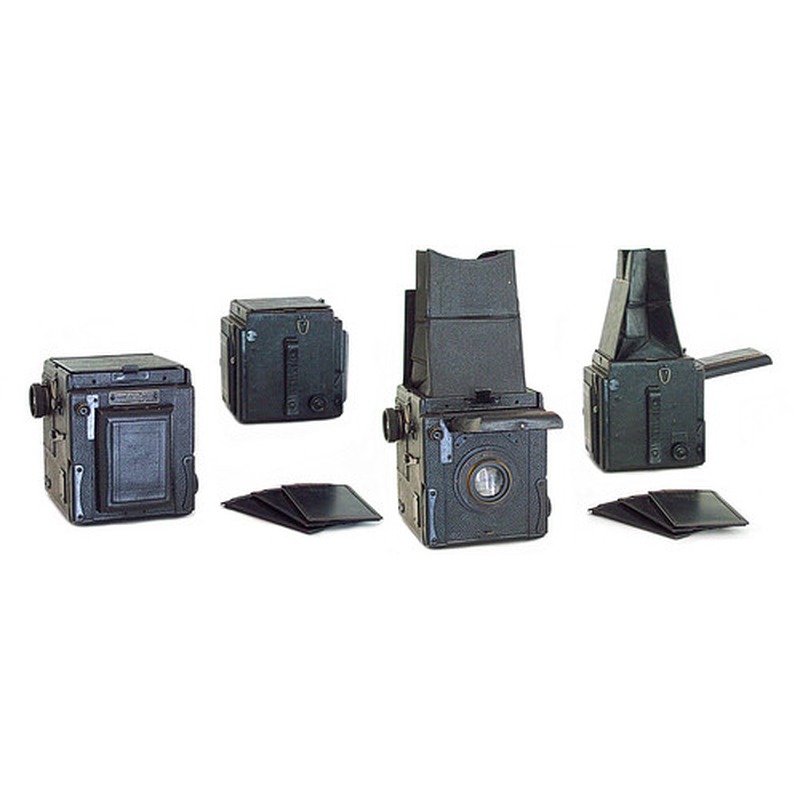
Houghton Ensign Focal Plane
Houghton · UK · 1926 · 135 film
The Ensign Focal Plane, introduced by Houghton in 1926, stands as an early participant in the crucial shift of 35mm film from the cinema realm into practical still photography. Representing British engineering amidst the German dominance of the nascent 35mm market spearheaded by Leitz (Leica), it utilized the then-emerging 135 cassette format, positioning it as a portable option for photographers seeking smaller cameras than bulky plate or roll-film models. While its specific design details are less documented than its German contemporaries, the name "Focal Plane" strongly indicates it employed a focal plane shutter, a then-innovative mechanism offering faster sync speeds and flexibility for interchangeable lenses – a significant technical advancement enabling greater versatility in exposure control.
Though it did not achieve the widespread fame or lasting impact of the Leica I, the Ensign Focal Plane holds notable historical importance as one of the first British 35mm cameras. Its existence reflects the competitive landscape and global interest in miniaturizing photography during the mid-1920s. It represents a significant step towards making 35mm film a viable platform for serious still photography, paving the way for the explosive growth and eventual dominance of the format in subsequent decades, even if Houghton's model itself remained a smaller player in that revolution.
Specifications
| Film Format | 135 |
/main.jpg)
/main.jpg)
/main.jpg)
 Enjoy this museum? Support on Ko-fi