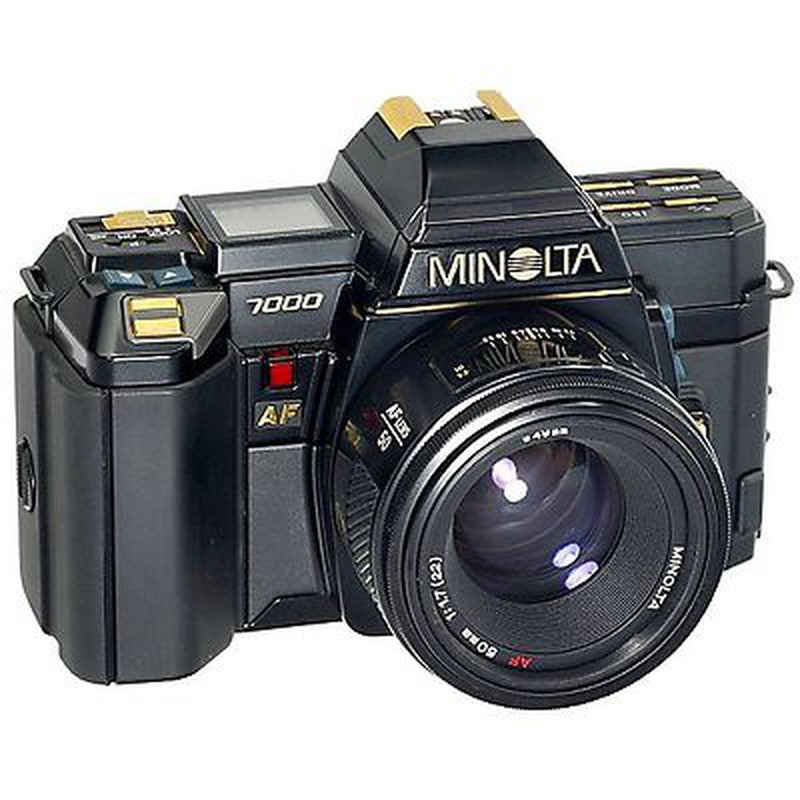
Minolta 7000 AF Gold
Minolta · Japan · 1985 · 135 film
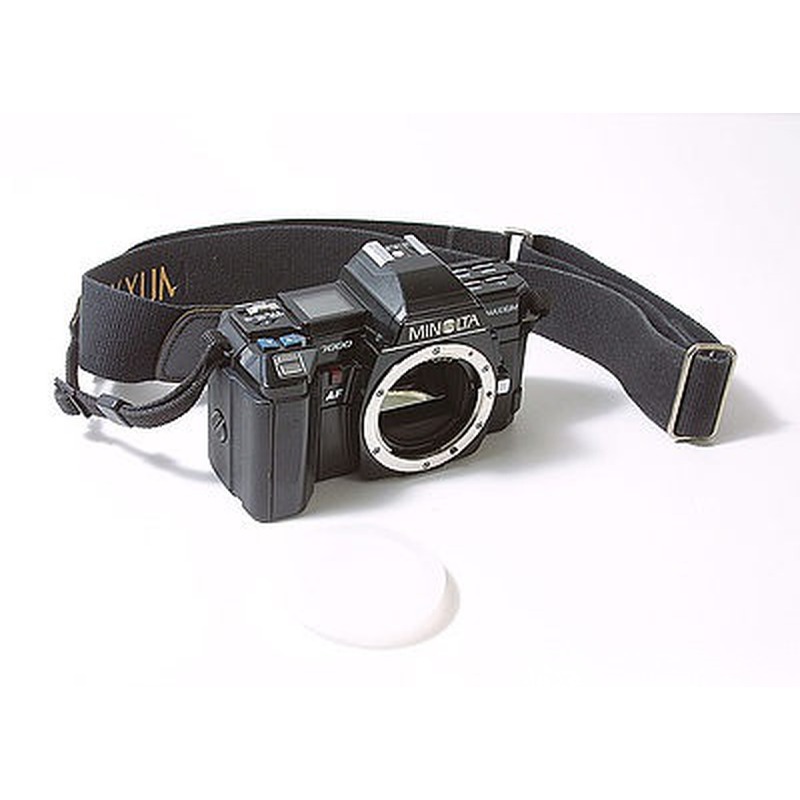
Released in 1985, the Minolta 7000 AF Gold represents a watershed moment in photographic history as the first commercially successful mainstream 35mm SLR to integrate practical autofocus with core SLR functionalities. While autofocus had been experimented with in earlier prototypes, Minolta's system was the first to combine phase-detection autofocus, autoexposure, and motorized film advance into a compact, relatively affordable body that appealed to amateur photographers. This complete package utilized the revolutionary Minolta Maxxum mount and A-mount lens system, effectively democratizing features once reserved for niche professional models and accelerating the industry's shift toward electronics in consumer photography. The "Gold" edition specifically commemorated this groundbreaking achievement, marking not just a product but a paradigm shift in how photographers interacted with their equipment.
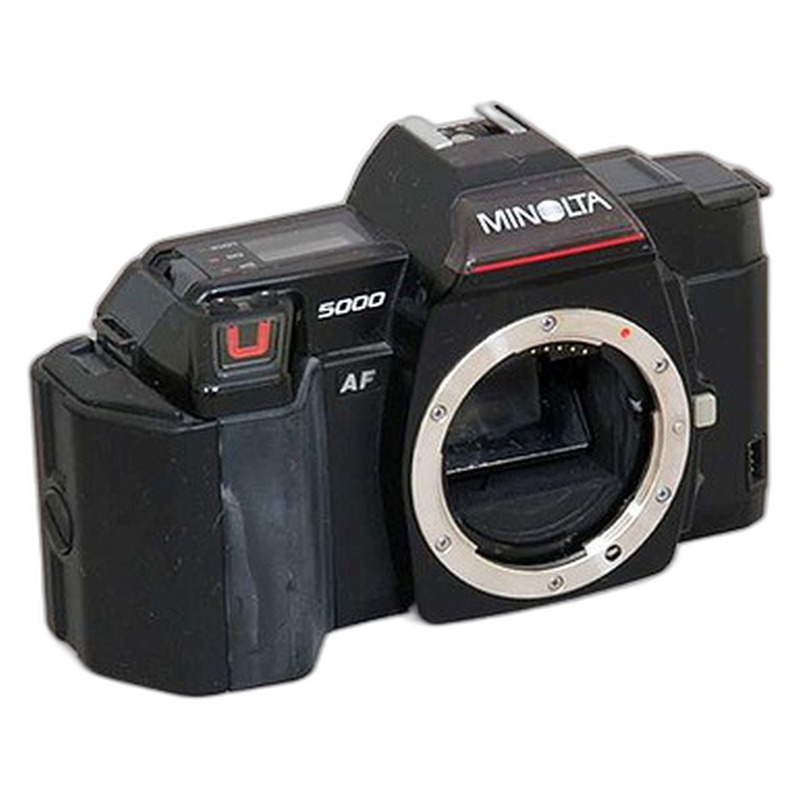
Design-wise, the 7000 AF Gold prioritized functionality over aesthetics, featuring a compact black body with prominent control buttons and a distinctive integrated motor drive housing that set it apart from the more mechanical SLRs of the preceding era. Its innovations went beyond mere automation; the camera pioneered TTL metering combined with its autofocus system, creating a seamless user experience that had previously been unattainable in consumer cameras. This integration of advanced electronics into a practical system established the template for virtually all autofocus SLRs and DSLRs that followed, from Minolta and its competitors. While not aesthetically timeless by today's standards, its design language reflected the technological optimism of the mid-1980s, emphasizing accessibility and technological progress over traditional elegance.
Specifications
| Film Format | 135 |
/main.jpg)
 Enjoy this museum? Support on Ko-fi