Pricing
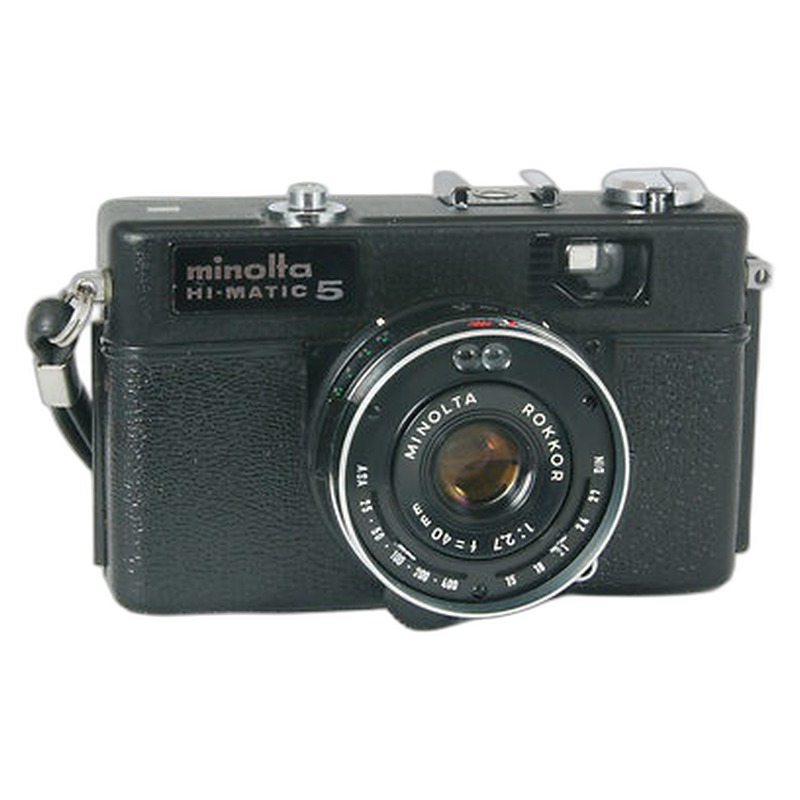
Minolta Hi-matic 5
Minolta · Japan · 1969 · 135 film
The Minolta Hi-matic 5, introduced in 1969, represents a significant step in making 35mm photography more accessible to the mass market. As part of Minolta's successful Hi-matic series, this camera emphasized simplicity and automation, targeting consumers who desired point-and-shoot convenience without complexity. It featured a fixed 45mm f/1.8 lens, a key specification for its time offering good light-gathering capability and sharpness. The core design centered around aperture-priority automatic exposure, where the user sets the desired aperture and the camera selects the appropriate shutter speed automatically, simplifying operation while allowing creative control over depth of field. This automation, coupled with its compact, ergonomic body finished in durable black enamel, made the Hi-matic 5 a popular and practical choice for everyday photography.
Built as a reliable workhorse for the general public, the Hi-matic 5 utilized a reliable Copal shutter with speeds from 1/500th down to 1 second, plus bulb mode. It incorporated a selenium-cell light meter displayed via match-needle needles in the viewfinder, providing clear exposure feedback. The camera's construction, primarily metal with some plastic components, offered solid durability for consumer use, though not intended for heavy professional demands. Its significance lies in its role as a well-engineered, affordable automatic camera that effectively brought advanced automation features to a broad audience during a period when 35mm film was becoming the dominant format for both enthusiasts and snapshooters.
Specifications
| Film Format | 135 |
/main.jpg)
/main.jpg)
/main.jpg)
 Enjoy this museum? Support on Ko-fi