Pricing
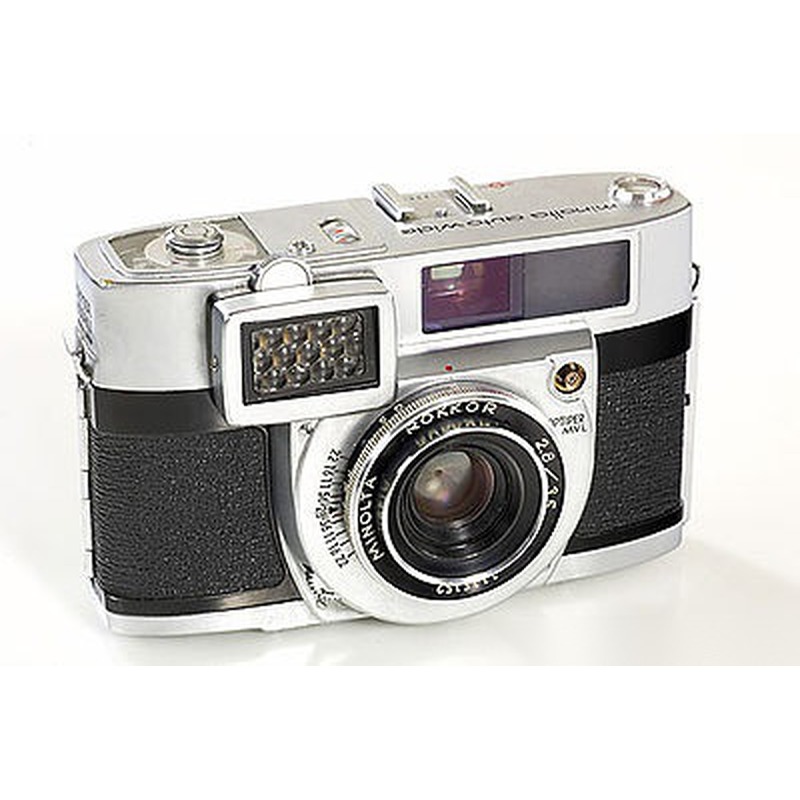
Minolta Auto Wide
Minolta · Japan · 1958 · 135 film
The Minolta Auto Wide, introduced in 1958, represents Minolta's entry into the increasingly competitive market of 35mm viewfinder cameras during the late 1950s. Designed as a practical and affordable option for amateur photographers, it featured a built-in lens, likely a standard wide-angle element (hence the name), and incorporated Minolta's signature "Auto" features. These typically included an automatic exposure system, which would have been a significant convenience at the time, freeing users from the need for manual aperture or shutter speed calculations. Constructed with Minolta's usual attention to durability for its class, it utilized a metal body and robust controls, reflecting the period's emphasis on solid build quality in consumer cameras. As part of Minolta's push to make photography more accessible, the Auto Wide aimed to provide reliable performance without the complexity or cost of interchangeable lens SLRs like the company's own emerging series.
While not groundbreaking in its fundamental design compared to contemporaries, the Minolta Auto Wide holds significance as a snapshot of late 1950s camera technology and market strategy. It embodied the automation trend moving through the industry, making accurate exposure easier for a broader audience. Minolta, a major Japanese manufacturer, leveraged this type of camera to solidify its position in the burgeoning global 35mm market, appealing to photographers who wanted a reliable, fixed-lens solution for everyday use. Its production run and subsequent legacy highlight the evolution towards more user-friendly controls and the democratization of high-quality 35mm photography.
Specifications
| Film Format | 135 |
/main.jpg)
/main.jpg)
/main.jpg)
/main.jpg)
 Enjoy this museum? Support on Ko-fi