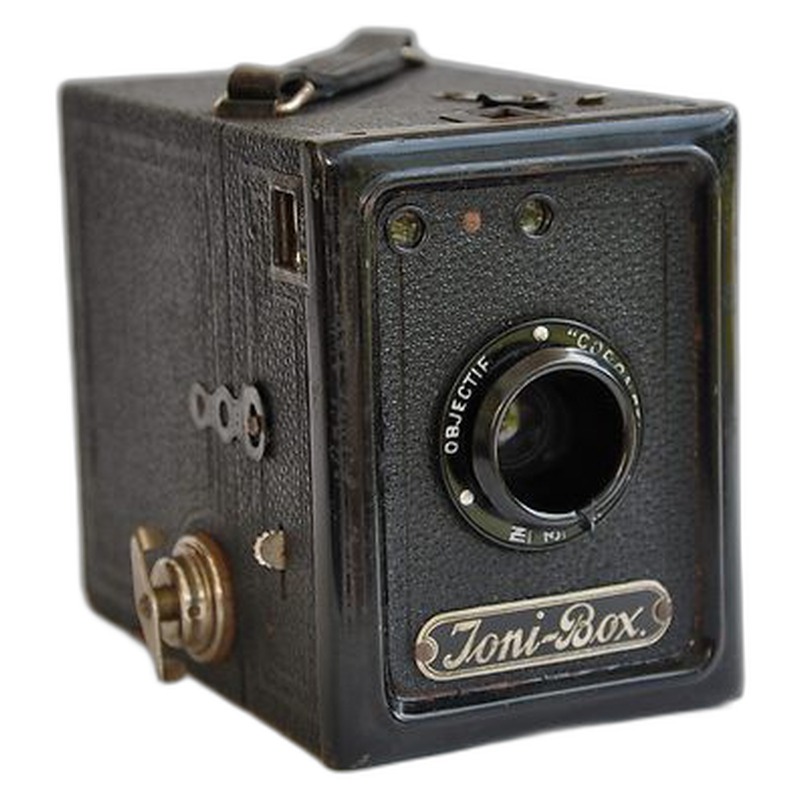
Coronet Joni-Box
Coronet · UK · 1930 · 135 film
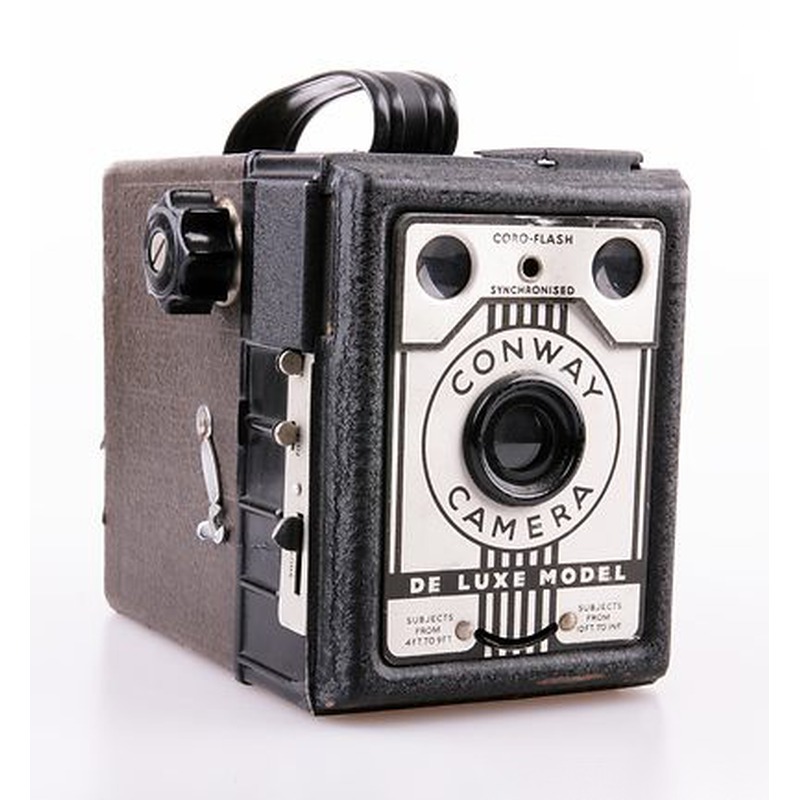
The Joni-Box by Coronet was introduced in 1930 as an early entrant in the burgeoning 35mm still camera market. Targeted at a budget-conscious audience, it utilized the now-standard 135 film format, making photography more accessible to the general public during a period when 35mm was still largely the domain of more sophisticated and expensive designs. Its significance lies in its role as a practical, affordable option that helped popularize the smaller format for everyday snapshots, contrasting sharply with the precision engineering of contemporaneous models like the Leica I. The Joni-Box likely prioritized simplicity and cost-effectiveness, featuring a basic box-like construction and straightforward controls aimed at ease of use for amateur photographers rather than technical innovation or exceptional optical performance.
As a representative of the early consumer-grade 35mm cameras, the Joni-Box serves as an interesting historical artifact reflecting the democratization of photography in the interwar era. Its production by Coronet, a British manufacturer known for simpler photographic equipment, underscores the competitive landscape pushing 35mm technology beyond niche professional use. While it did not introduce groundbreaking features, its existence demonstrates the rapid spread of the 135 format and the growing market for compact, relatively inexpensive cameras that paved the way for the post-WWII boom in snapshot photography. It remains a modest but noteworthy example of the utilitarian designs that helped make 35mm film the dominant format for decades.
Specifications
| Film Format | 135 |
/main.jpg)
/main.jpg)
 Enjoy this museum? Support on Ko-fi