/main.jpg)
Rolleiflex 4x4 Post-War Baby (black)
Rollei · Germany · 1963–1968 (5 years) · 120 film
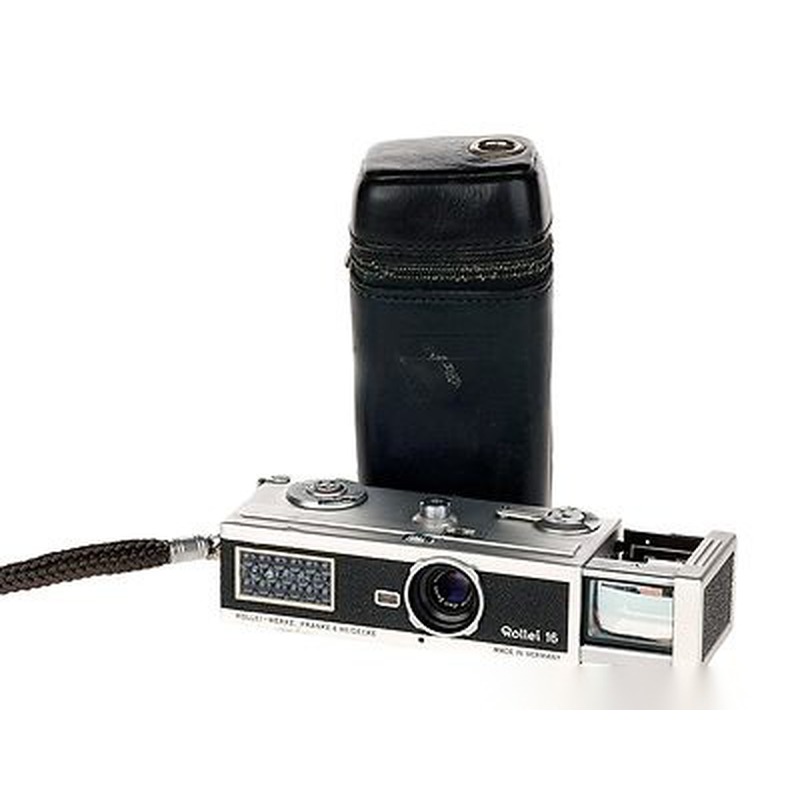
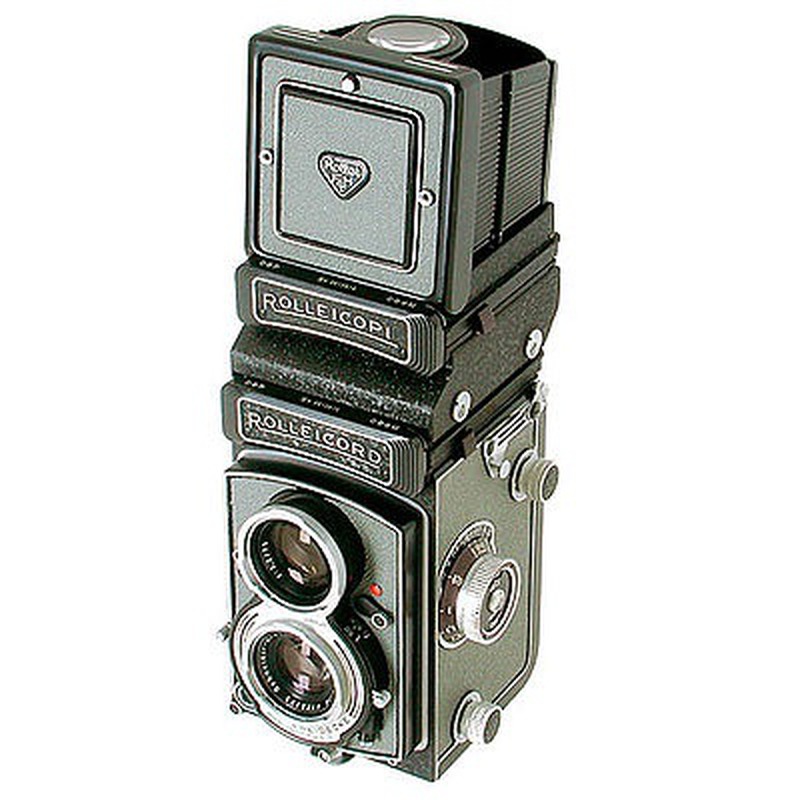
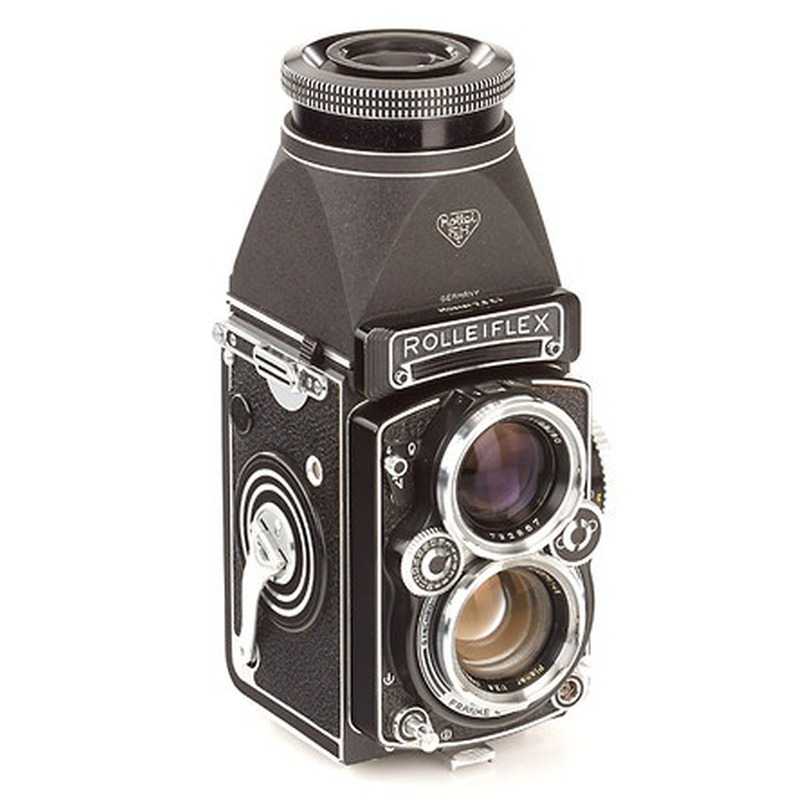
The Rolleiflex 4x4 Post-War Baby (black) represents a scaled-down, more accessible version of Rollei's iconic twin-lens reflex (TLR) cameras, specifically designed for photographers seeking the Rolleiflex experience in a smaller, more affordable format. Produced in black from 1963 to 1968, this camera utilized the 127 roll film format (offering sixteen 4x4 cm exposures per roll), distinguishing it from Rollei's primary 120-film, 6x6 cm format TLRs. Its core design retained the hallmark Rolleiflex elements: a sharp triplet lens system (often a Xenar), a brilliant waist-level viewfinder with magnifier for precise focusing, and a robust, all-mechanical shutter system (typically a Synchro-Compur offering speeds up to 1/300s). The Baby's significance lies in its role as an entry point into the Rolleiflex system, providing a simpler, lighter, and more portable alternative to the larger, heavier standard models without sacrificing the essential quality and handling characteristic of the brand. It catered to amateurs and enthusiasts who desired the twin-lens reflex aesthetic and Rollei build quality at a more modest price point, particularly as color photography and portable cameras gained popularity. However, its production was relatively short-lived, ultimately curtailed by the declining market for the 127 film format.
Specifications
| Film Format | 120 |
/main.jpg)
 Enjoy this museum? Support on Ko-fi