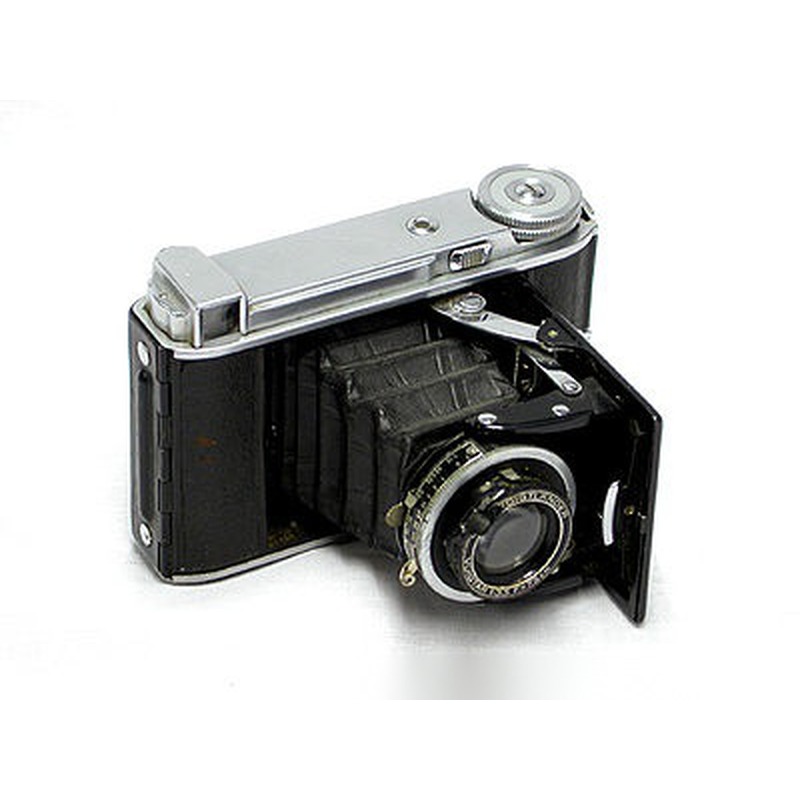
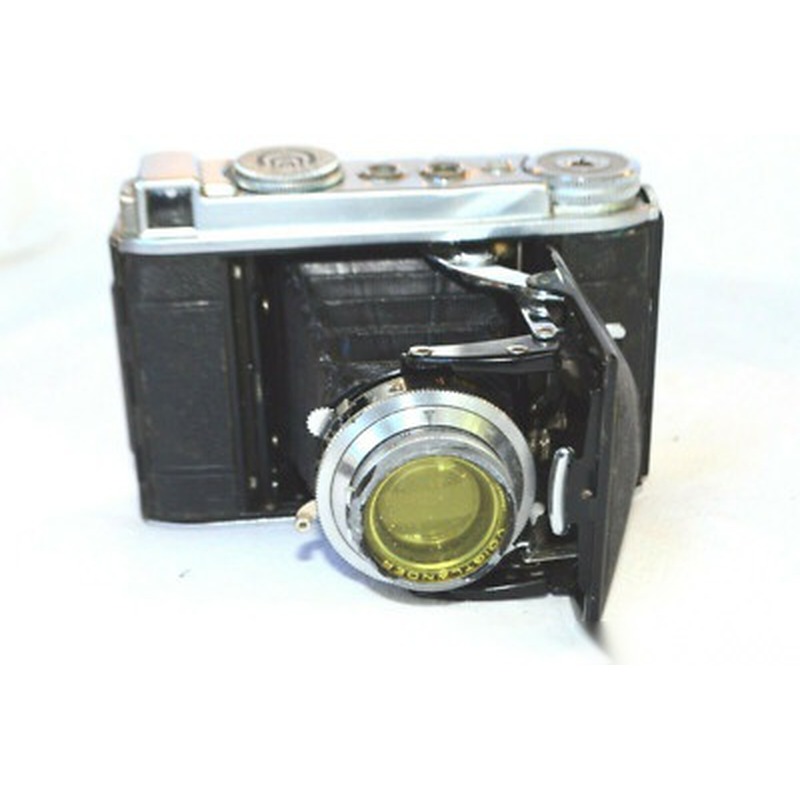
Voigtlander Bessa 46 Baby Bessa
Voigtlander · Germany · 1938 · 135 film
The Bessa 46 Baby Bessa represents a typical example of the compact 35mm cameras produced by Voigtlander in the late 1930s. Sharing the distinctive Bessa design lineage of its larger siblings, the Baby Bessa offered a scaled-down, more affordable option for photographers entering the 35mm format. Its design prioritized simplicity and portability, featuring coupled rangefinder focusing and a straightforward shutter mechanism, likely a simple leaf shutter, catering to the mass market. Constructed with metal and a leatherette covering, it embodied the utilitarian approach common in consumer models of the pre-war era, aiming for reliable operation within its intended segment without introducing groundbreaking technology.
As an entry-level Voigtlander 35mm camera, the Baby Bessa contributed to popularizing the format for amateur photographers seeking a smaller, more convenient alternative to bulkier roll-film cameras. It existed alongside Voigtlander's more sophisticated Bessa models and competed with offerings from other manufacturers during a period when 35mm photography was rapidly gaining traction. Its production in 1938 places it on the eve of significant global disruption, potentially limiting its overall market impact and legacy compared to cameras introduced or flourishing after World War II. It stands as a representative piece of Voigtlander's mid-range offerings, emphasizing practicality and accessibility for its time.
Specifications
| Film Format | 135 |
/main.jpg)
/main.jpg)
 Enjoy this museum? Support on Ko-fi