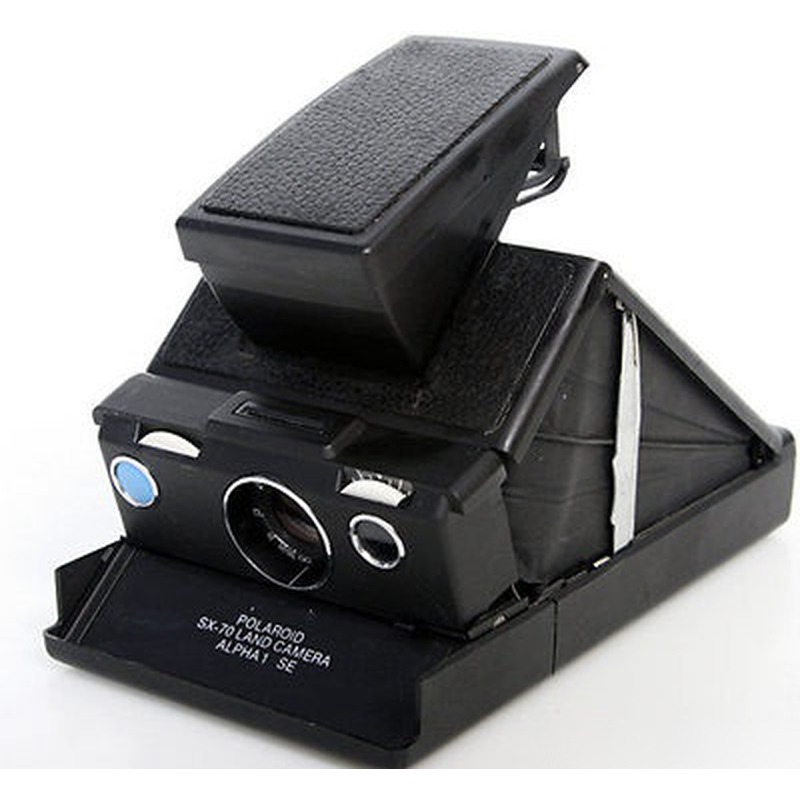
Polaroid SX-70 Alpha 1 SE
Polaroid · USA · 1977 · Instant film
The SX-70 Alpha 1 SE represents the zenith of Polaroid's folding instant camera technology, launched in 1977 as an evolution of the groundbreaking original SX-70 from 1972. Building upon the revolutionary integral film system that eliminated the need for peel-apart negatives and introduced the iconic white-bordered print, the Alpha 1 SE introduced refinements like a sharper glass lens (a 4-element, 116mm f/8.0 Zeiss-derived design on many models), improved electronic exposure control, and a sleeker, more robust die-cated aluminum alloy body. Its iconic clamshell design, featuring a polished black or chrome finish, instantly retracted into a compact form factor, making it the world's first truly practical and sophisticated folding SLR instant camera. The camera's electromechanical shutter and complex light management system allowed for daylight-only use initially, but later models addressed this limitation. Its autofocus system, though primitive by today's standards, was a significant advancement for its time. The SX-70 became a cultural phenomenon, embraced by artists such as Andy Warhol and Salvador Dalí, not just for convenience but for its unique aesthetic qualities and the immediacy it brought to the photographic process, fundamentally altering how people captured and shared moments.
The Alpha 1 SE specifically targeted enthusiasts seeking higher image quality and enhanced controls over the base SX-70 model. It featured a more precise rangefinder focusing system and a lightmeter capable of accurately measuring light through the lens (TTL) for exposure compensation, allowing photographers greater creative control over the final print. The inclusion of a flash-ready socket and the ability to use the SX-70 "Sonar" autofocus unit on some variants further cemented its position as the top-tier folding instant camera. Its sophisticated engineering and premium materials reflected Polaroid's ambition to make instant photography aspirational and technically advanced. The camera's ability to produce rich, diffusion-transfer prints with a distinct tonal range and warm, often slightly grainy character created a signature look that became synonymous with 1970s and 1980s photography, distinct from the clinical precision of 35mm film. It stands as a landmark achievement in compact camera design and the pinnacle of chemical-based instant image capture before the digital revolution.
Specifications
| Film Format | Instant |
 Enjoy this museum? Support on Ko-fi