/main.jpg)
Pricing
ICA Lloyd Stereo Panorama (670)
ICA · Germany · 1914 · 135 film
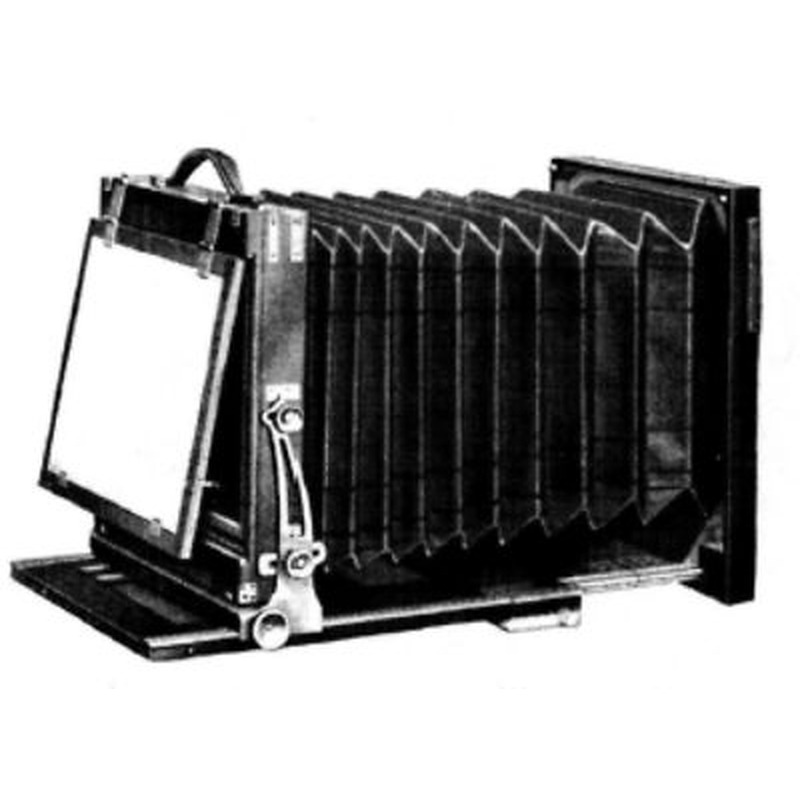
The Lloyd Stereo Panorama (670) stands as a remarkable, if obscure, milestone in the early development of 35mm photography. Introduced in 1914 by ICA (Internationale Camera Aktiengesellschaft), this camera represents one of the very first attempts to adapt the 35mm motion picture film format for still photography, predating the commercially successful Leica by nearly a decade. Its innovative design combined stereoscopic imaging with panoramic capture, exposing two adjacent frames simultaneously on the 35mm film strip. This dual-purpose approach aimed to provide both immersive 3D scenes and wide-angle views from a single, relatively compact device—a significant advancement over the bulky plate cameras and stereo view cameras of the era. The camera's experimental nature is evident in its simple metal construction and basic controls, which prioritized format innovation over refined engineering.
As a product of its time, the Lloyd Stereo Panorama (670) exemplifies the pioneering spirit of the pre-Leica 35mm era, demonstrating ICA's forward-thinking exploration of motion picture film for still photography applications. While overshadowed historically by the Leica I and its successors that would ultimately popularize 35mm photography, the 670 remains an important technological stepping stone. Its unique stereo-panoramic concept represents an ambitious early attempt to merge two specialized photographic techniques into a portable form factor using what was then a nascent film format. The camera serves as a tangible reminder of the experimental period that preceded the widespread adoption of 35mm as the dominant format for both still and motion imaging.
Specifications
| Film Format | 135 |
/main.jpg)
/main.jpg)
/main.jpg)
/main.jpg)
/main.jpg)
 Enjoy this museum? Support on Ko-fi