Pricing
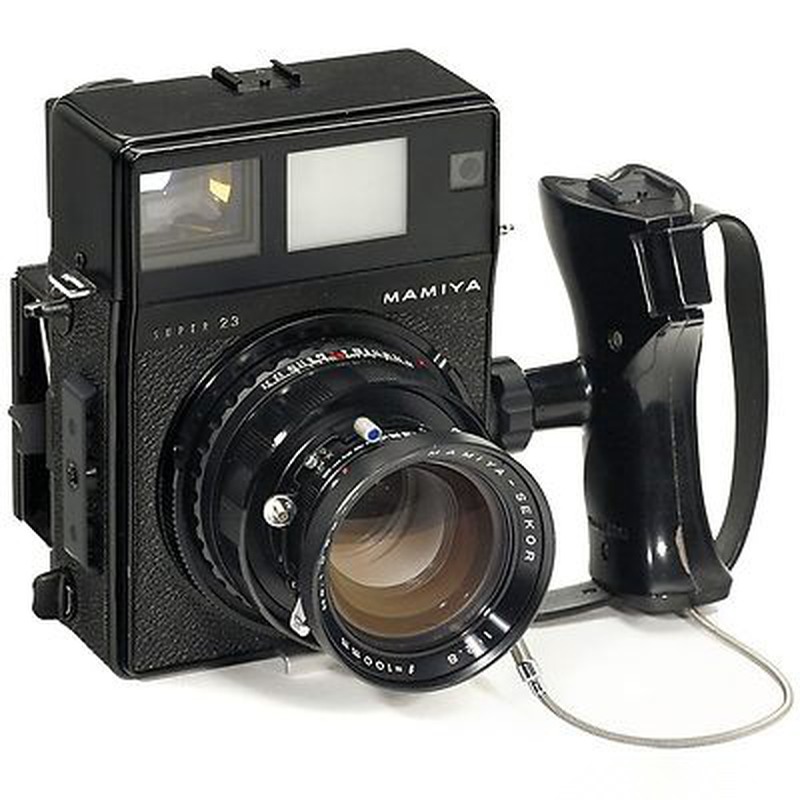
Mamiya Super 23
Mamiya · Japan · 1967
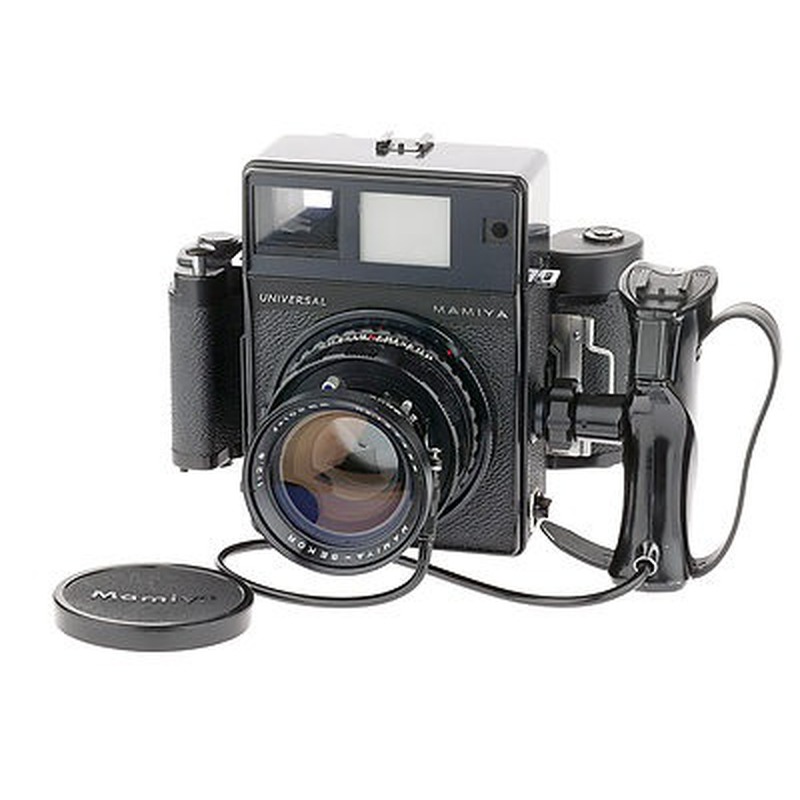
The Mamiya Super 23 represents a significant step forward for Mamiya in the professional medium format realm when it was introduced in 1967. Designed as a technical or press camera, it offered a more modular and potentially more portable alternative to large-format view cameras while retaining the image quality and versatility of 6x7 cm or 6x9 cm format film. A key innovation was its interchangeable back system, allowing photographers to switch between film types, Polaroid backs, or digital backs (though digital wasn't available at launch) without removing the entire ground glass assembly, a significant workflow advantage in demanding environments. Its construction utilized metal alloys, known for durability, and featured movements for perspective and focus control, crucial for architectural and commercial photographers. While sharing the market with cameras like the Hasselblad 500 series and Graflex Speed Graphics, the Super 23 carved out a niche for professionals needing larger negatives than 6x6 cm but greater mobility than 4x5 inch cameras.
Practicality was central to the Super 23's design. It featured coupled rangefinders for critical focusing accuracy on Mamiya Sekor lenses and a robust, foldable bellows system. The camera typically used Mamiya's own line of high-quality, large-aperture lenses, contributing to its professional appeal. Its introduction in 1967 coincided with a period where Japanese manufacturers were increasingly competing with European and American companies in the professional market, pushing innovation and features. Although it never achieved the iconic status of a Nikon F or Leica M3, the Super 23 was a workhorse tool relied upon by photographers requiring flexibility and medium format quality on location or in the studio for decades following its launch.
 Enjoy this museum? Support on Ko-fi